


 返回
返回
返回

New Product Launch | EZ Trans siRNA & mRNA Transfection Reagent Powers Your Research!
The Yuanli Ji transfection reagent series just gained a new addition!!!
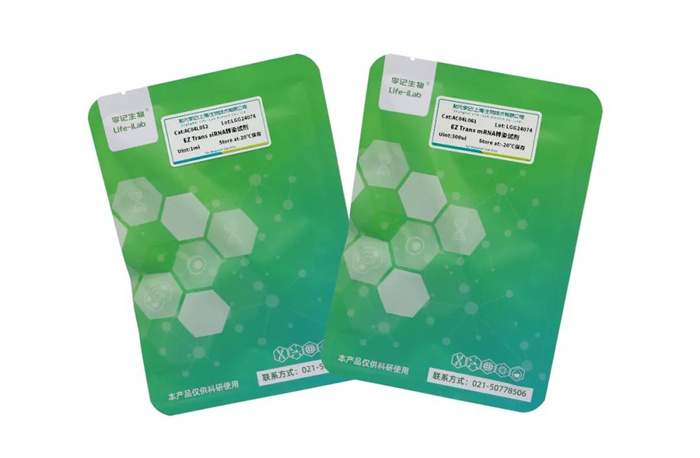
The newly launched products this time include:
① AC04L052-EZ Trans siRNA Transfection Reagent
② AC04L062-EZ Trans mRNA Transfection Reagent
We offer both large and small sizes! See details below:
New item one
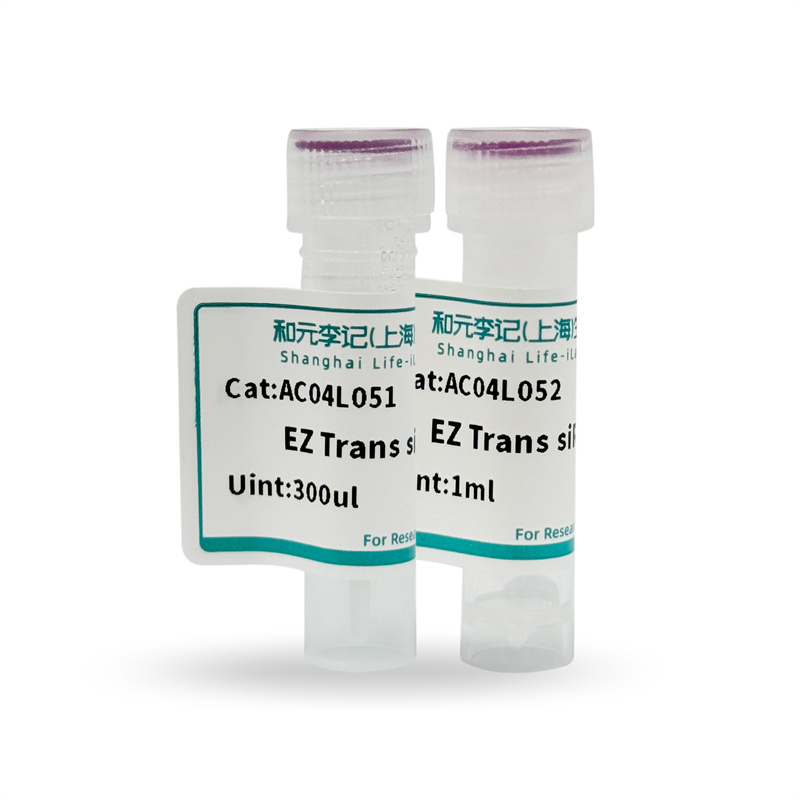
EZ Trans siRNA Transfection Reagent
Item No.: AC04L051 Specification: 300 µL
Item number: AC04L052 Specifications: 1mL
Introduction: This product is a novel transfection reagent developed based on cationic polymeric polymers. Suitable for transfection of siRNA and microRNA (miRNA) It can achieve highly efficient, low-toxicity transfection in a variety of common cell types and offers advantages such as ease of use and excellent reproducibility, making it suitable for siRNA- or miRNA‑mediated gene knockdown experiments.
Figure showing the gene knockdown efficiency of siRNA.
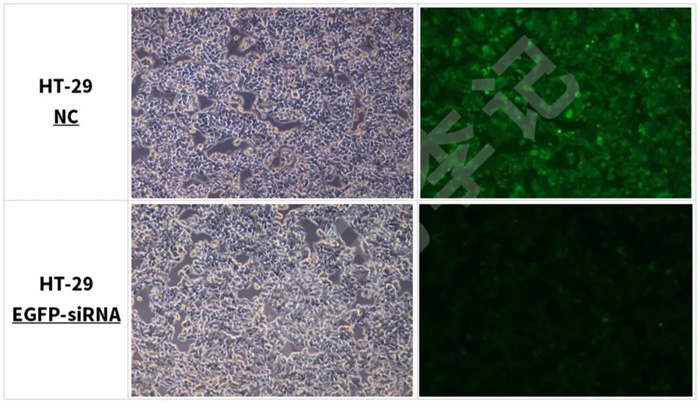
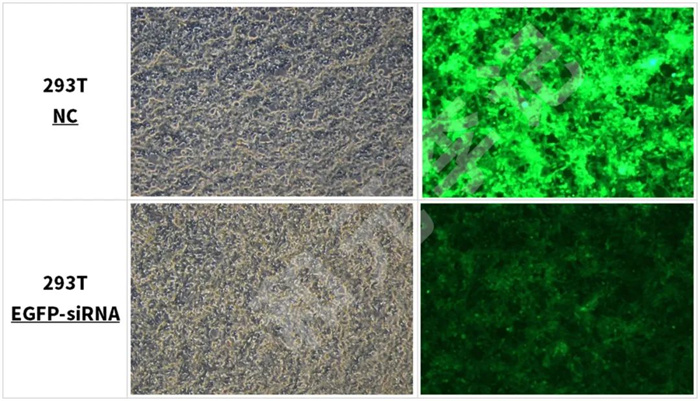
The day before transfection, 293T and HT‑29 cells stably expressing EGFP were seeded in 24-well plates. siRNA-mediated knockdown of EGFP expression was performed according to the manufacturer’s instructions for the siRNA transfection reagent. Forty-eight hours post‑transfection, knockdown efficiency was assessed by fluorescence microscopy. The results showed that the transfected cells remained healthy, with a marked reduction in green fluorescence intensity, indicating successful downregulation of EGFP protein expression.
siRNA Western blot image
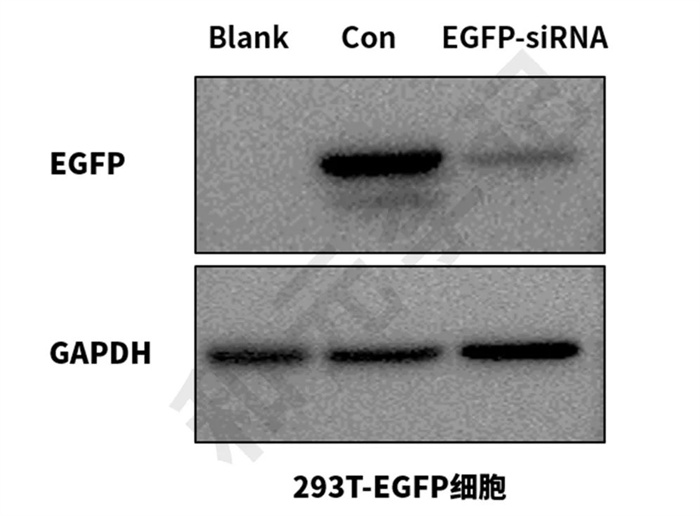
The day before transfection, 293T cells stably expressing EGFP were seeded into 24-well plates. siRNA-mediated knockdown of EGFP expression was performed according to the manufacturer’s instructions for the siRNA transfection reagent. Forty-eight hours after transfection, knockdown efficiency was assessed by Western blotting. The results showed a significant reduction in EGFP protein levels.
siRNA Transfection Efficiency Visualization Figure
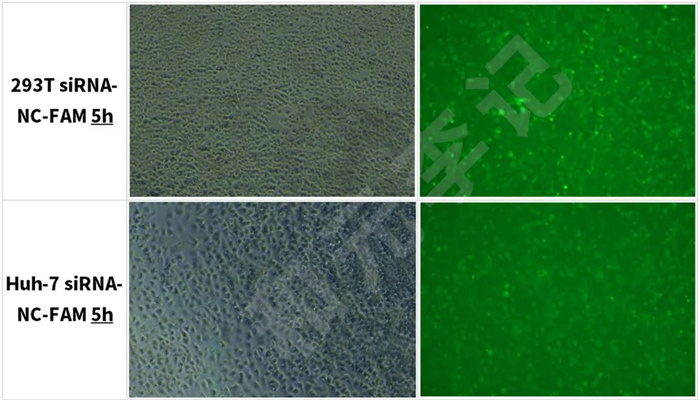
The day before transfection, 293T and Huh-7 cells were seeded separately in 24-well plates. Following the manufacturer’s instructions for the siRNA transfection reagent, FAM‑labeled negative control siRNA was transfected. After 4–6 hours, transfection efficiency was assessed in each cell line using a fluorescence microscope. The results showed that the transfected cells remained healthy, with fluorescence efficiencies exceeding 90% in all cases.

The day before transfection, 293T cells were seeded in a 24-well plate. Following the manufacturer’s instructions for the siRNA transfection reagent, Cy3‑labeled negative control siRNA was transfected. After 4–6 hours, transfection efficiency was assessed by fluorescence microscopy. The results showed that the transfected cells remained healthy, with fluorescence efficiencies exceeding 90% in all cases.
miRNA transfection efficiency visualization diagram
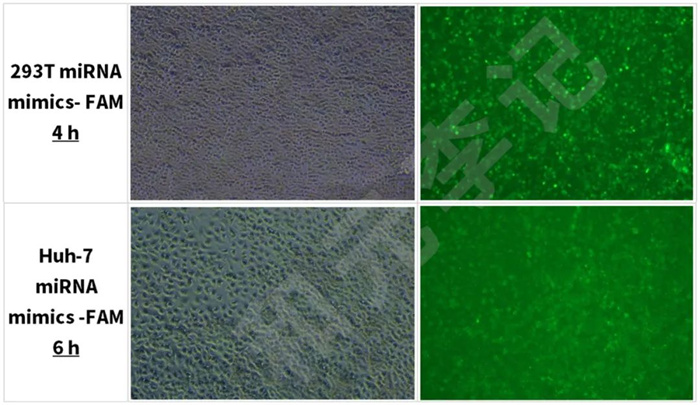
The day before transfection, 293T and Huh-7 cells were seeded in 24-well plates. Following the instructions for the siRNA transfection reagent, FAM‑labeled negative control microRNA mimics were transfected as single‑stranded oligonucleotides. After 4–6 hours of incubation, transfection efficiency was assessed by fluorescence microscopy in each cell line. The results showed that the transfected cells remained healthy, with fluorescence efficiencies exceeding 90% in all cases.
New Product 2
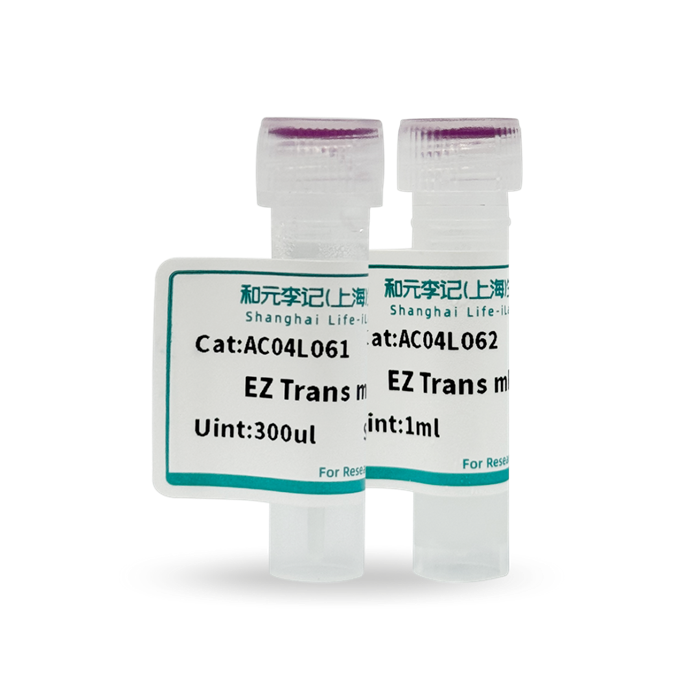
EZ Trans mRNA Transfection reagent
Item No.: AC04L061 Specification: 300 µL
Item No.: AC04L062 Specification: 1 mL
Introduction: Messenger RNA (mRNA) initiates protein translation in the cytoplasm without requiring nuclear entry, enabling faster protein expression than DNA transfection while avoiding the risk of genomic integration. EZ Trans mRNA transfection reagent is a… A transfection reagent that combines the advantages of cationic polymers and liposomes. , synergistically facilitating the entry of the transfection complex into the cell, followed by its release in the cytoplasm, It can achieve efficient, low-toxicity transfection across multiple cell types. 。
mRNA Transfection Efficiency Visualization Figure

The day before transfection, 293T, Huh-7, BV2, and B16F10 cells were seeded in 24-well plates, ensuring that cell confluency reached at least 60–80% at the time of transfection. Green fluorescent protein (GFP) mRNA was transfected according to the manufacturer’s protocol for the mRNA transfection reagent. Twenty-four hours post-transfection, transfection efficiency was assessed in each cell line using a fluorescence microscope. The results showed that the transfected cells remained healthy, with fluorescence efficiencies exceeding 90% in all cases.
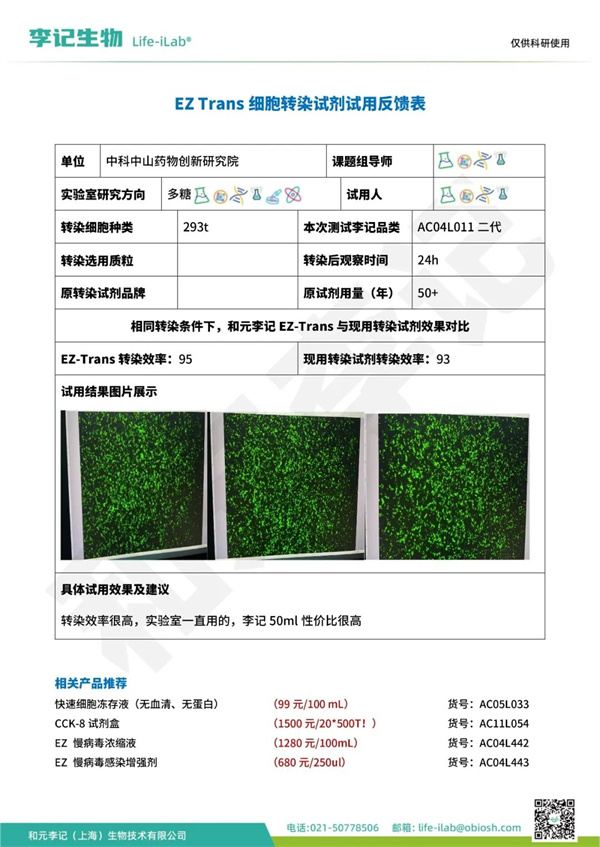
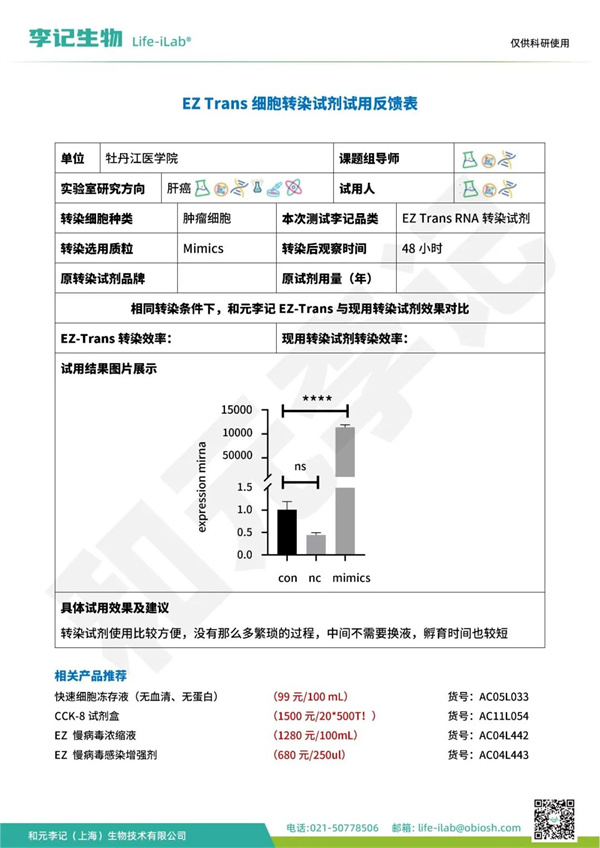
Transfection Reagent – Featured Feedback
Group Website
-
Contact Information
Landline phone:021-50778506
Business Manager:18616108315Business Cooperation/Scholarships:18616108697
Address:4th Floor, Building 27, Lane 908, Ziping Road, International Medical Park, Pudong New Area, Shanghai
Email:ztt0005@obiosh.com

WeChat Official Account
Online Customer Service 1
Online Customer Service 2
 Telephone consultation


