


 返回

Original article link: HeYuan Bio – Retrovirus
Retroviruses, also known as reverse transcribing viruses, are RNA viruses characterized by long terminal repeats (LTRs) at both ends of their genome. These viruses are spherical, enveloped, and bear surface spikes; their virions measure approximately 100 nm in diameter. The retroviral genome contains three essential genes: Gag, which encodes the viral core proteins; Pol, which encodes the reverse transcriptase; and Env, which encodes the viral envelope glycoproteins.
Retroviral packaging and cell infection process
Retroviral packaging is performed using either a three-plasmid or a four-plasmid system; the cell culture supernatant is collected, and the virus is concentrated, purified, and harvested by ultracentrifugation.
Titration assay method: Quantitative PCR was used to determine the copy number of exogenous DNA in the cellular genome following interference.
Principle of titer determination: Retroviruses mediate the integration of exogenous genes into the target cell genome via reverse transcription.
During retroviral gene expression, RNA is first reverse-transcribed into DNA by the action of reverse transcriptase, forming the DNA integration‑competent complex. The resulting DNA is then transported into the nucleus, where it integrates randomly into the host cell’s genomic DNA. Subsequent transcription and translation culminate in the expression of the viral gene.
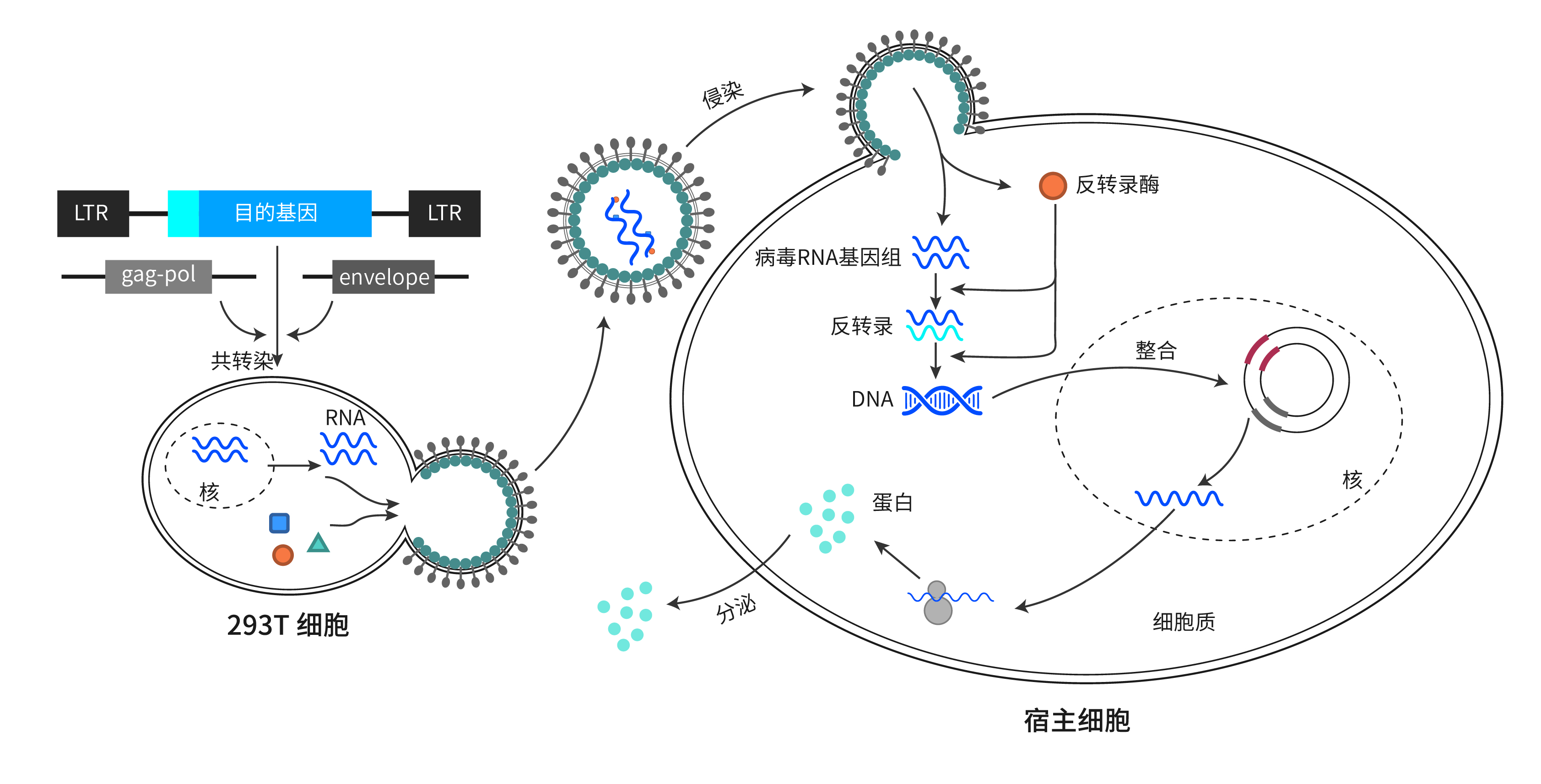
Retroviral Packaging and Infection Mechanisms
Characteristics of retroviruses
The most distinctive feature of retroviruses is their specific infection of cells in the mitotic phase, as the retroviral DNA genome can only access the host cell’s genetic material when the infected cell is undergoing cell division.
Comparison of the Biological Characteristics of Different Viruses
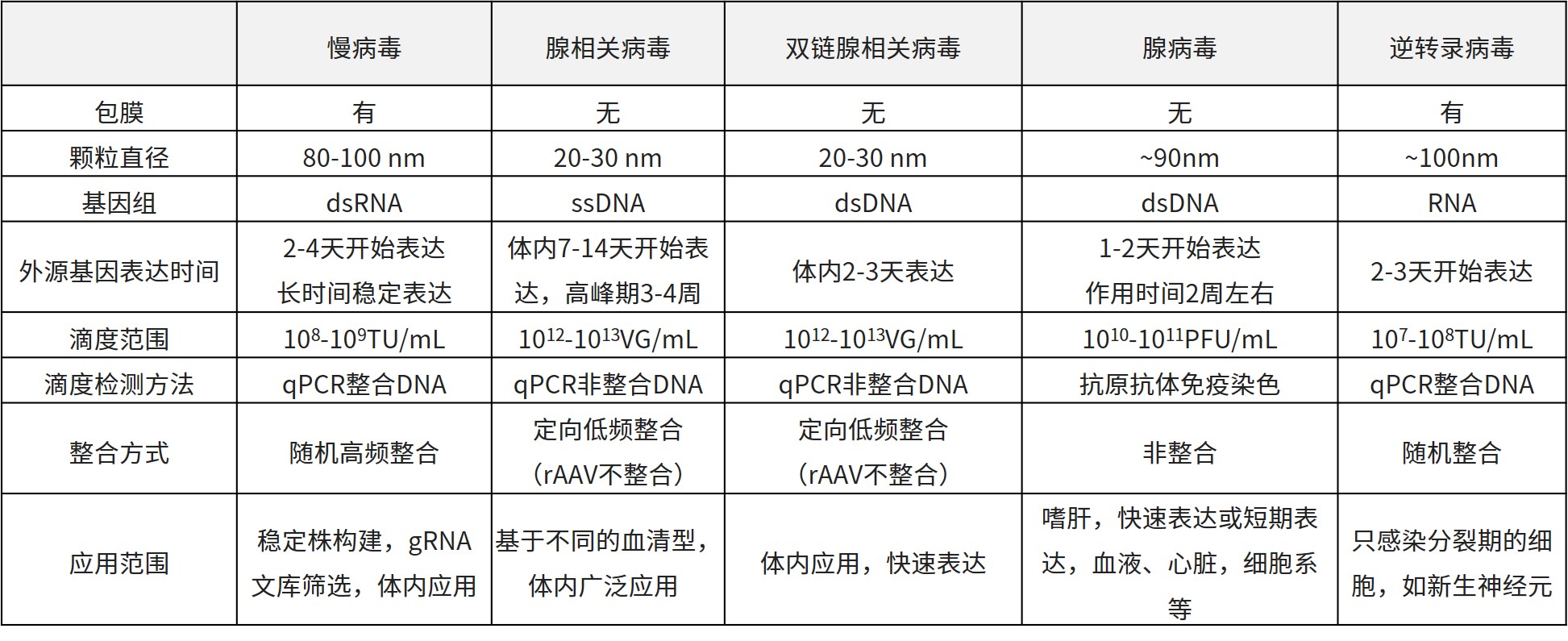
Based on the aforementioned characteristics, retroviruses are well suited for a wide range of stem cell–related studies, including research on neural stem cells and hematopoietic stem cells. In in vivo applications, retroviruses are particularly useful for investigating the functions of adult-born neurons and glial progenitor cells.
Retroviral Application Cases
1. Article published by the client: Scientific Reports. (IF=4.122). Xiong Y S, et al. (2015). Early treatment with minocycline alleviates white matter and cognitive impairments following chronic cerebral hypoperfusion. [Retrovirus, Stroke]

Injection site: Subventricular zone (SVZ) of the lateral ventricle in mice
Vector: pROV-EF1a-GFP
Viral vector: retrovirus
Viral titer: 1E+8 cfu/mL
Injection volume: 1 µL
2. Application Case: Nature (IF = 41.577). Yu YC, et al. (2009). Specific synapses develop preferentially among sister excitatory neurons in the neocortex. [Retrovirus, Development]
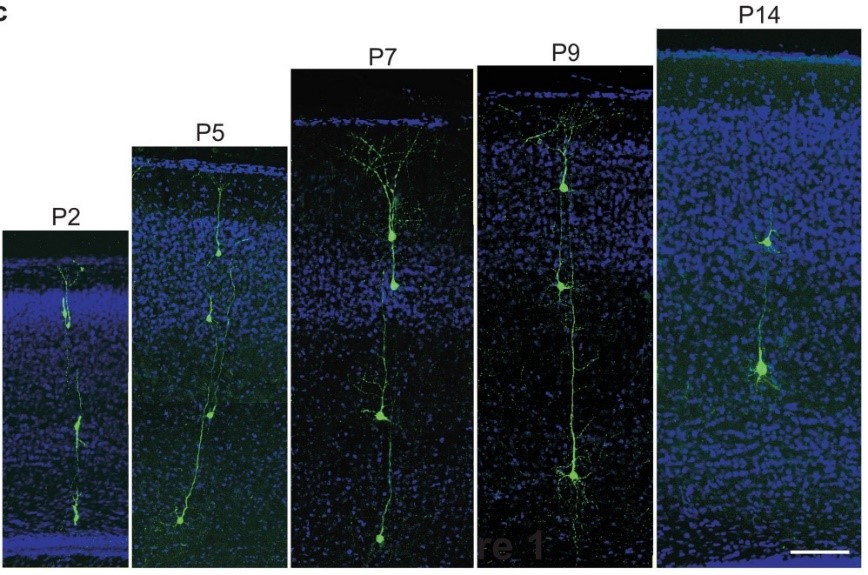
Injection site: E12–E13 mouse embryos
Viral vector: retrovirus
Injection volume: 1 µL
 Telephone consultation


