


 返回

Original article link: HeYuan Bio – Promoter Optimization
Currently, the primary research directions in basic R&D include engineering lentiviral (LV) vectors, screening adeno‑associated virus (AAV) serotypes, optimizing tissue‑specific promoters, comprehensively developing CRISPR/Cas technologies with a focus on in vivo applications, and advancing other cutting‑edge biological research tools.
The promoter elements of viral vectors determine the specificity of viral gene expression. For targeted research or gene therapy, it is essential to continuously develop and optimize promoters that are tailored to specific cell types or tissues. At present, the R&D Department at HeYuan is focusing on optimizing and screening promoters for specific cell types within various tissues and organs, and we also welcome collaborative projects in promoter development.
List of Common Promoters
|
CAG/CBG/CMV/EF1a |
Common broad-spectrum promoters |
GFAP |
Astrocytes (long promoter) |
|
hSyn |
Mature neuron |
shortGFAP |
Astrocytes (short promoter) |
|
CaMKIIα |
Projection neuron |
GfaABC1D |
Astrocyte |
|
GAD67 |
GABAergic interneuron |
Iba1/CX3CR1 |
Microglia |
|
mDLx |
GABAergic interneuron |
MBP |
Oligodendrocyte |
|
fPV |
PV+ interneurons |
NG2/NGL2 |
Oligodendrocyte precursor cells |
|
fNPY |
NPY+ interneurons |
TH |
Catecholaminergic neurons (DA, NE, E) |
|
fSST |
SST+ interneurons |
PRSx8 |
Noradrenergic neurons |
|
DAT |
Dopaminergic neurons |
ChAT |
Cholinergic neurons |
|
L7pcp2 |
Cerebellar Purkinje cells |
D1/D2 |
Dopamine D1/D2 receptor neurons |
|
FEV |
Serotonergic neurons |
HCRT |
Hypothalamic orexin neurons |
|
cTNT |
Cardiomyocyte |
TBG |
Liver |
Specific Promoter Infection Case
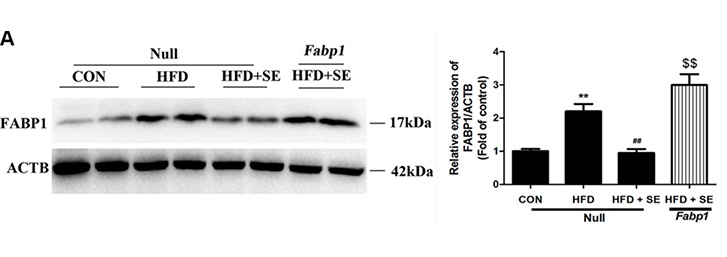
AAV8-TGB-Fabp1[1] (TGB liver-specific promoter)
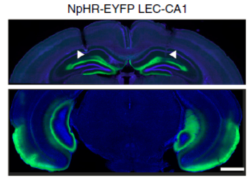
AAV-CaMKIIα-NpHR-EYFP[2] (CaMKIIα–specific promoter for projection neurons)
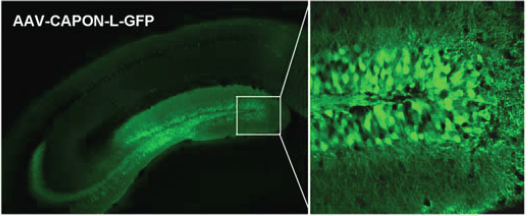
AAV-Syn-CAPON-L-GFP[3] (Syn mature neuron-specific promoter)
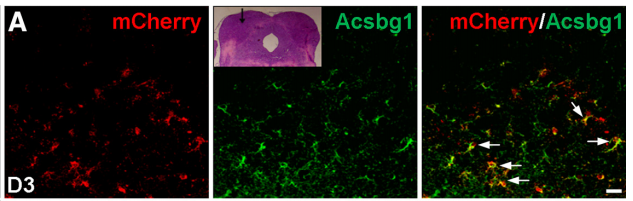
AAV-GFAP- AAV–Ascl1/mCherry [4] (GFAP astrocyte-specific promoter)
References:
[1] Pi H. et al., (2019) Long-term exercise prevents hepatic steatosis: a novel role of FABP1 in regulation of autophagy-lysosomal machinery. FASEB J. doi: 10.1096/fj.201900812R.
[2] Li YD, et al., (2017) A distinct entorhinal cortex to hippo-campal CA1 direct circuit for olfactory associative learning. Nature Neuroscience.
[3] Zhu L J, et al., (2014) CAPON-nNOS coupling can serve as a target for developing new anxiolytics. Nature Medicine.
[4] Liu Y G, et al., (2015) Ascl1 Converts Dorsal Midbrain Astrocytes into Functional Neurons In Vivo. J. Neuroscience.
 Telephone consultation


