


 返回

Adeno-associated virus (AAV) is a member of the Parvoviridae family, a class of non-enveloped, icosahedral small viruses that cannot replicate autonomously. It measures approximately 20–26 nm in diameter and carries a linear single-stranded DNA genome of about 4.7 kb. The recombinant adeno-associated virus vector (rAAV) used in research is a genetically engineered delivery vehicle derived from the non-pathogenic wild-type AAV. Due to its diverse serotypes, extremely low immunogenicity, high safety profile, broad host‑cell tropism—capable of infecting both dividing and non‑dividing cells—strong transduction efficiency, and prolonged in vivo gene expression, rAAV is regarded as one of the most promising vectors for genetic research and gene therapy.
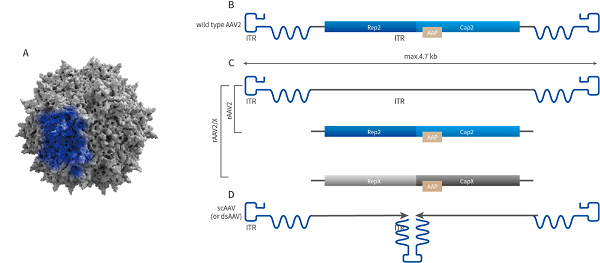
AAV genome structure
rAAV Packaging, Purification, and Titer Determination
During AAV packaging, the packaging plasmid encodes the gene of interest along with two inverted terminal repeats (ITRs), which are essential for viral replication and packaging. The helper plasmid carries the AAV‑encoded cap genes (encoding viral capsid proteins) and rep genes (involved in viral replication), as well as an adenoviral helper construct. After co‑transfecting these three plasmids into 293T cells, AAV particles begin to replicate and assemble. HeYuan Bio employs internationally recognized standard protocols for the production and quality control of adeno‑associated viruses, utilizing a three‑plasmid system for packaging in 293T cells. The resulting viral particles are purified by ultracentrifugation, and viral genome copies are quantified by qPCR. Additionally, upon request, we can perform protein staining assays to assess capsid integrity and measure endotoxin levels. Typically, rAAV titers range from 10¹² to 10¹³ VG/mL, fully meeting the requirements of various in vivo experimental applications.
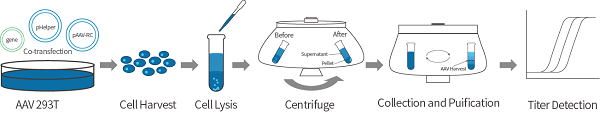
AAV Packaging Flowchart
Titer determination method: Quantitative PCR is used to measure the copy number of exogenous DNA in the viral genome.
Principle of titer determination: The genome of adeno-associated virus is single-stranded DNA, and the copy number of exogenous DNA reflects the copy number of the viral genome.
The process of rAAV infection of cells
The purified AAV viral vector can be used to infect cells. During infection, AAV binds to specific receptors on the cell surface, activating intracellular signaling pathways that trigger receptor-mediated endocytosis, allowing the virus to enter the cell. With the assistance of cellular organelles such as endosomes and the Golgi apparatus, AAV is transported into the nucleus, where it subsequently undergoes lysis. Its single-stranded DNA must then be converted into double-stranded DNA before the target gene can be expressed.
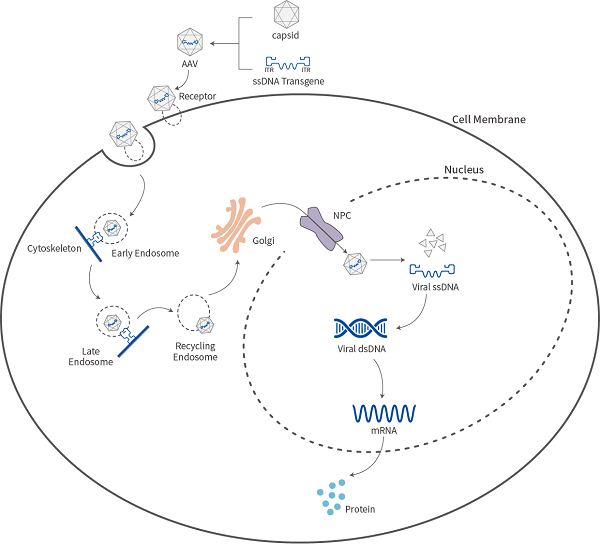
Mechanism of rAAV action
Advantages of rAAV Vectors
1. High safety and low immunogenicity: AAV is a replication-defective DNA virus with no autonomous replication capability. Wild-type AAV relies on the rep genes for low-frequency, site-specific integration, whereas rAAV does not integrate into the host genome. To date, no human or mammalian diseases caused by AAV have been reported, making it one of the safest viral vectors among gene therapy products approved by the FDA.
2. Broad host cell range: AAV exhibits a wide host range and is capable of infecting both dividing and non-dividing cells.
3. Strong transduction efficiency: AAV has a diameter of approximately 20–26 nm, is small in size, and exhibits high titers, giving it excellent diffusion capabilities. Notably, AAV‑PHP.eB and AAV9 can cross the blood–brain barrier, making them widely used in neuroscience research.
4. Prolonged in vivo gene expression: AAV possesses the ability to sustain long-term transcriptional expression; in vivo expression typically peaks around 3 weeks and remains at a high level thereafter, with a duration of action exceeding 5 months.
5. Diverse Serotypes: AAV boasts a wide array of serotypes, and in addition, we continuously engineer and screen for novel serotypes—such as AAV1–13, AAV2/1, 2/2, 2/5, 2/6, 2/8, 2/9, DJ; retro, PHP.eB, and others—tailored to different experimental designs.
Comparison of the Biological Characteristics of Different Viruses
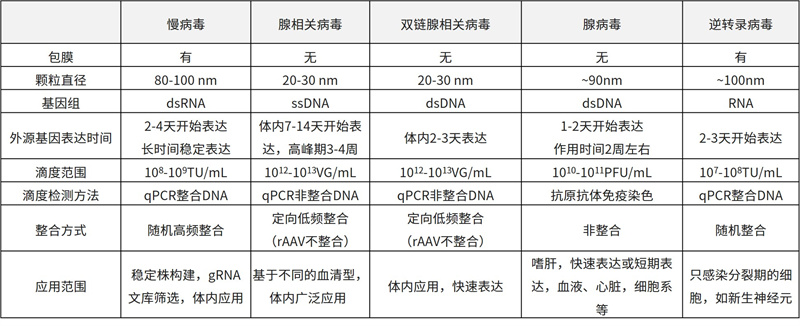
Based on the aforementioned characteristics, AAV is regarded as an efficient and safe tool for both in vitro and in vivo gene delivery. Particularly in whole‑organism studies, compared with other commonly used viral vectors, AAV offers a mild infection profile and long‑lasting expression, making it an invaluable instrument for genetic manipulation.
rAAV Serotype Selection
Currently, the total number of registered AAV serotypes has exceeded 196. In primates, there are 13 distinct AAV serotypes (AAV1–AAV13), among which AAV2, AAV3, and AAV9 originate from humans. Notably, AAV2 was the first virus to be cloned and remains, to this day, the most thoroughly studied and widely used viral vector. As research has progressed, scientists have discovered that different AAV serotypes can undergo recombination, resulting in hybrid viruses that inherit characteristics from both parental strains. Consequently, AAV subtypes have emerged.
Currently, the rAAV vectors commonly used in research are hybrid viral vectors generated by combining the AAV2 genome with various capsid proteins, typically designated as rAAV2/N (where N represents a different capsid serotype). These recombinant viruses retain the stable expression and genomic integration capabilities of AAV2 while acquiring tissue‑tropism specific to particular serotypes—determined by distinct structural epitopes on the capsid surface that confer receptor specificity—thus exhibiting a degree of organ‑specific targeting.
Tissue tropism of different AAV serotypes
|
Serotype |
Tissue affinity |
|
rAAV2/1 |
Nervous system (high-titer anterograde transsynaptic), muscle, Skeletal muscle, cardiac muscle, smooth muscle |
|
rAAV2/2 |
Retina, nervous system, Muscle, liver, vascular smooth muscle |
|
rAAV2/3 |
Muscle, liver, lung, eye |
|
rAAV2/4 |
Nervous system, muscles, eyes, brain |
|
rAAV2/5 |
Nervous system, lungs, retina, Liver, synovial joint |
|
rAAV2/6 |
Nervous system, lungs, Muscle, heart |
|
rAAV2/7 |
Muscle, liver |
|
rAAV2/8 |
Nervous system, liver, muscles, Adipose tissue, pancreas, retina, |
|
rAAV2/9 |
Nervous system, myocardium, lungs, Retina, skin |
|
rAAV2-retro |
Nervous system (retrograde non-synaptic) |
|
AAV-PHP.eB |
Crosses the blood–brain barrier (intravenous administration) |
|
AAV-PHP.S |
All peripheral nerves (tail vein injection) |
|
AAV-PAN |
Pancreas (intraperitoneal injection) |
|
AAV-LUNG |
Lung (tail vein injection) |
|
AAV-DJ |
Retina, lungs, kidneys, In vitro-infected cells |
|
AAV-7m8 |
Retina |
|
AAV-ShH10Y |
Retinal Müller cells |
|
AAV-Rh10 |
Liver, blood, heart, In vitro-infected cells |
|
AAV-Anc80L65 |
inner ear, retina, Skeletal muscle, liver |
|
AAV-SCH9 |
Neural stem cells in the SVZ region |
Small tip: If you’re unsure which serotype to choose, consider conducting a preliminary experiment using Cyagen Biosciences’ Pandora’s Virus (a mixture of AAV serotypes). By comparing the infection efficiency of different serotypes in your target tissue, you can optimize experimental conditions—such as injection method, injection site, and viral titer—to achieve more favorable results.
Pandora’s Virus Details:
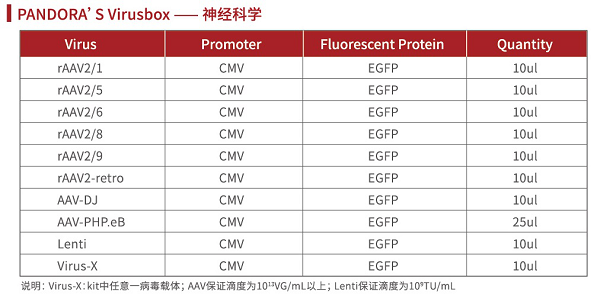
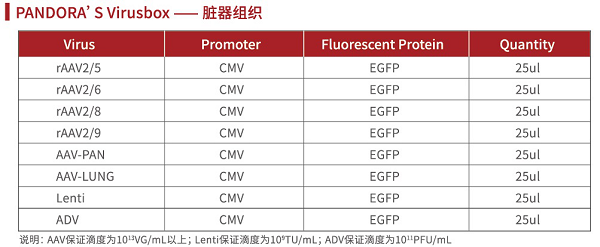
rAAV Vector Application Cases
1. Applications in the field of neuroscience
1.1 Lateral Habenular Nucleus & Optogenetics
Customer-published article: Nature. (IF=41.577). Yang Y, et al. (2018). Ketamine blocks bursting in the lateral habenula to rapidly relieve depression. [Adeno-associated virus, depression, optogenetics]
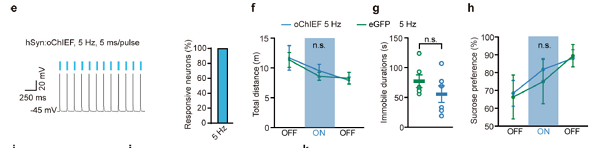
Injection site: mouse LHb
Vector: AAV2/9-hSyn-oChIEF-tdTomato
Serotype: AAV2/9
Viral titer: 6.29E+12 VG/mL
Injection volume: 100 nl
Observation period: 1 month
1.2 Parabrachial Nucleus & Chemogenetics
Customer-published article: Science. (IF=41.058). Mu D, et al. (2017). A central neural circuit for itch sensation. [Adeno-associated virus, itch, optogenetics, chemogenetics]
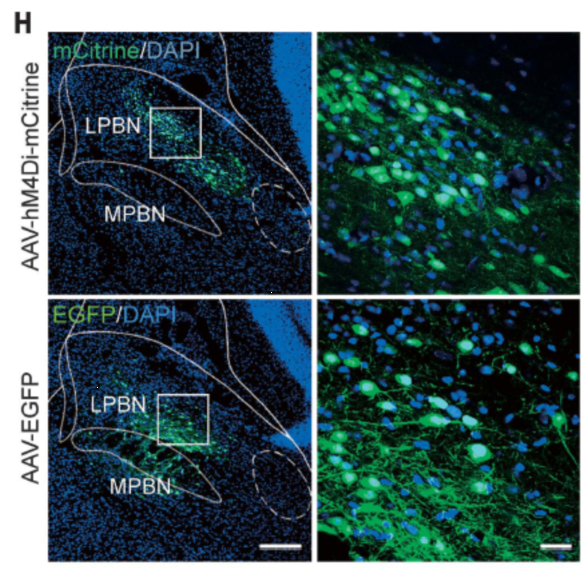
Injection site: mouse PBN
Vector: AAV-hSyn-HA-hM4Di-IRES-mCitrine
Serotype: AAV2/9
Viral titer: 1E+13 VG/mL
Injection volume: 150 nl
Observation period: 3 weeks
1.3 Thalamus & Calcium Imaging
Customer-published article: Science. (IF=41.058). Ren S, et al. (2018). The paraventricular thalamus is a critical thalamic area for wakefulness. [Adeno-associated virus, wakefulness]
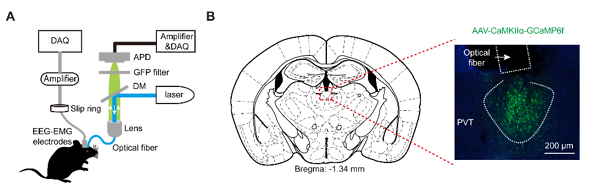
Injection site: mouse PVT
Vector: AAV-CaMKIIα-GCaMP6f
Injection volume: 100 nl
Observation period: 4 weeks
1.4 Thalamic paraventricular nucleus & neuronal death
Customer-published article: Science. (IF=41.058). Ren S, et al. (2018). The paraventricular thalamus is a critical thalamic area for wakefulness. [Adeno-associated virus, wakefulness]
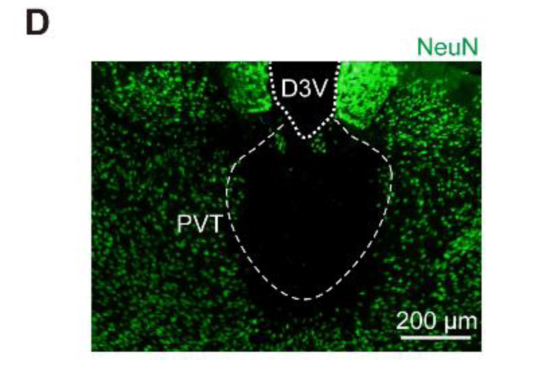
Injection site: mouse PVT
Vector: AAV-CaMKIIα-Cre-GFP & AAV-DIO-caspase-3
Injection volume: 100 µL of a 1:1 mixture of the two viral preparations.
Observation period: 4 weeks
1.5 Hippocampus, Cortex & Retrograde Non-Cross-Synaptic (rAAV2/retro)
Customer-published article: Biological Psychiatry. (IF=11.984). Bing Xing Pan, et al. (2018). Chronic stress causes projection-specific adaptation of amygdala neurons via SK channel downregulation. [Adeno-associated virus, anxiety disorder, optogenetics]
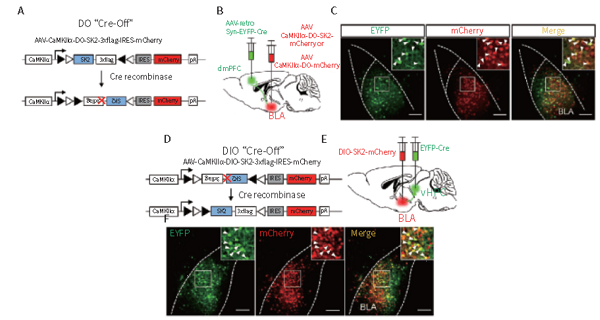
Injection site: mouse dmPFC, VHPC
Vectors: AAV2/1-retro-Syn-eYFP-Cre, AAV2/8-CaMKIIα-DO-SK2, and AAV2/8-CaMKIIα-DIO-SK2-mCherry
Injection volume: 300 nl
Observation period: 4 weeks
1.6 Primary Motor Cortex & Anterograde Transsynaptic (rAAV2/1)
Nature Neuroscience. (IF=19.912). Yao J, et al. (2018). A corticopontine circuit for initiation of urination. [Adeno-associated virus, neural circuit]
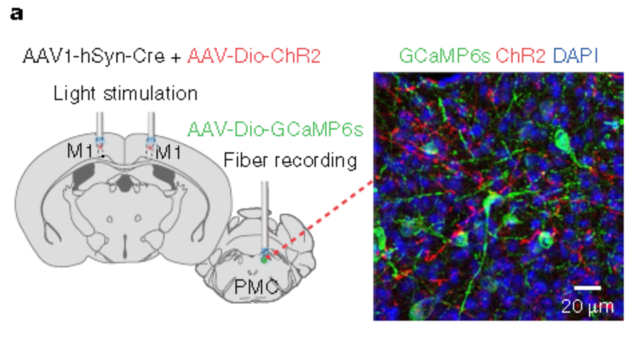
Injection site: mouse cortical M1 and PMC
Vectors: rAAV2/1-hSyn-Cre & rAAV2/9-DIO-hChR2(H134R)-mCherry, rAAV2/9-DIO-GCaMP6s
Viral titers: rAAV2/1: 5E+12 VG/mL; rAAV2/9-DIO-hChR2: 1.2E+13 VG/mL; rAAV2/9-DIO-GCaMP6s: 1E+12 VG/mL
Injection volume: Multi-point injection, 30–40 nL per site.
Observation period: 4 weeks
1.7 Anterior cingulate cortex & trans-synaptic tracing (WGA-Cre)
Customer-published article: Science Advances. (IF=11.511). Ping Zheng, et al. (2019). Crucial role of feedback signals from the prelimbic cortex to the basolateral amygdala in the retrieval of morphine withdrawal memory. [Adeno-associated virus, addiction, AAV1, AAV-WGA-Cre]
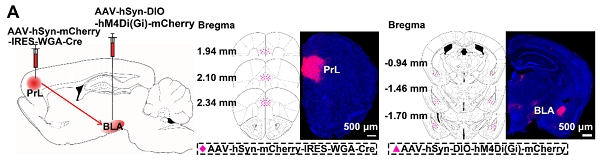
Injection site: mouse PrL
Vector: AAV-hSyn-mCherry-IRES-WGA-Cre
Viral titer: 4.28E+12 VG/mL
Injection volume: 300 nl
Observation period: 4 weeks
1.8 Cortex & AAV Interference (AAV-shRNA)
Customer-published article: Nature Medicine. (IF=22.864). Cao X, et al. (2013). Astrocyte-derived ATP modulates depressive-like behaviors.[Adeno-associated virus, depression]
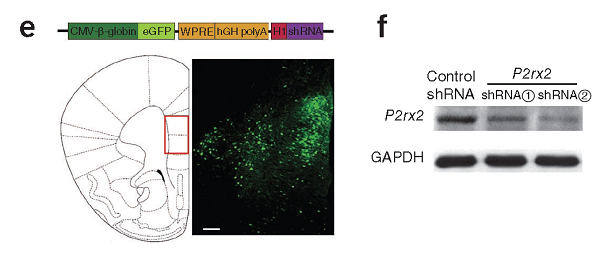
Injection site: mouse mPFC
Vector: AAV-CMV-P2rx2 shRNA-EGFP
Viral titer: 3E+12 VG/mL
Injection volume: 1.5 µL
Observation period: 2 weeks
1.9 Whole-brain expression & blood–brain barrier crossing (AAV-PHP.eB)
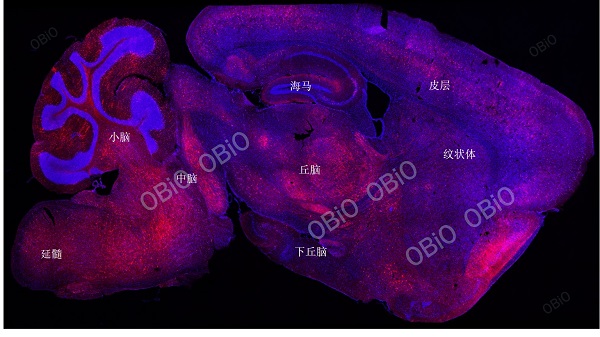
HeYuan Bio—In Vivo Whole-Brain Infection via Intravenous Injection of rAAV-PHP.eB
Total virus count: 1.5E+11 VG
Injection volume: 200 µL
Viral expression duration: four weeks
1.10 Sparse Labeling
Applied Literature: Luo WS, et al., (2016) Supernova: A Versatile Vector System for Single Cell Labeling and Gene Function Studies in vivo. Sci Rep.
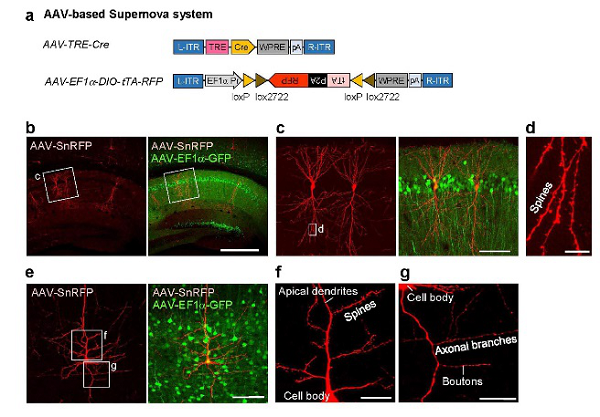
Vector information: pAAV-PTRE-tight-NLS-Cre (108–109 VG/mL), pAAV-EF1a-DIO(tTA-P2A-mScarlet)-WPRE (1012 VG/mL)
1.11 Applications in the Retina
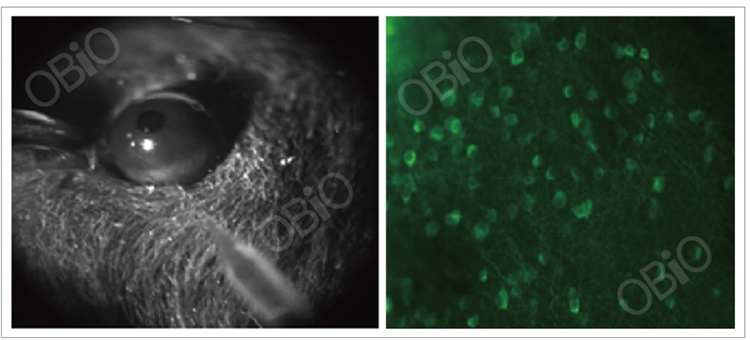
HeYuan Bio—Intravitreal Injection
Viral vector: AAV-syn-GCaMP6s
2. Applications in other organs
2.1 rAAV Infection of the Liver
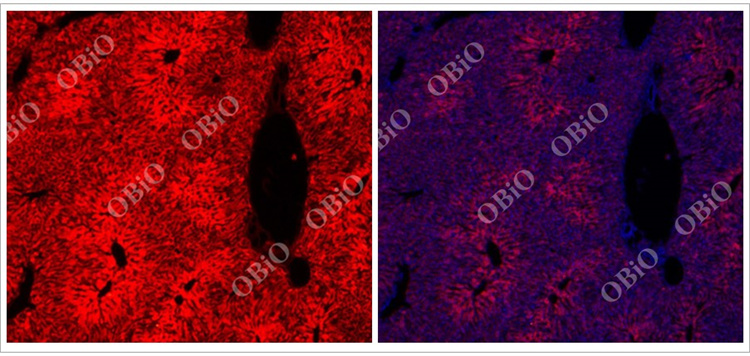
HeYuan Bio—Case of rAAV2/8 Intravenous Injection Infecting the Liver
Total virus count: 1E+11 VG
Injection volume: 200 µL
Viral expression duration: four weeks
2.2 rAAV Infection of the Heart
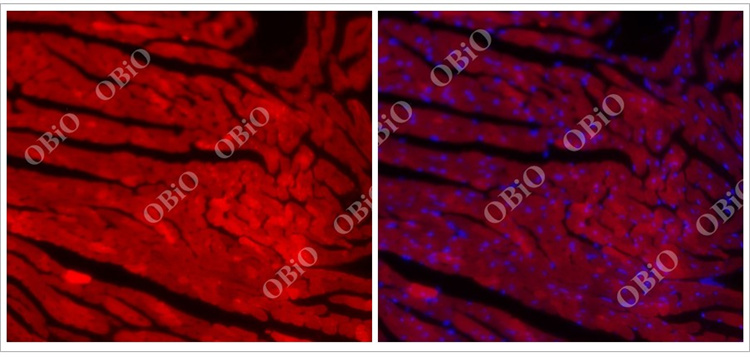
HeYuan Bio—Case of Cardiac Infection Following Intravenous Injection of rAAV2/9 via the Tail Vein
Total virus count: 2E+11 VG
Injection volume: 200 µL
Viral expression duration: four weeks
2.3 rAAV Infection of the Lung
 HeYuan Bio—An Example of rAAV-Lung Pulmonary Infection via Tail Vein Injection
Total virus count: 5E+11 VG
Injection volume: 200 µL
Viral expression duration: two weeks
Customer-published article: Cell. (IF=36.216). Huijuan Wu, et al. (2020). Progressive Pulmonary Fibrosis Is Caused by Elevated Mechanical Tension on Alveolar Stem Cells. [Adeno-associated virus, interference]
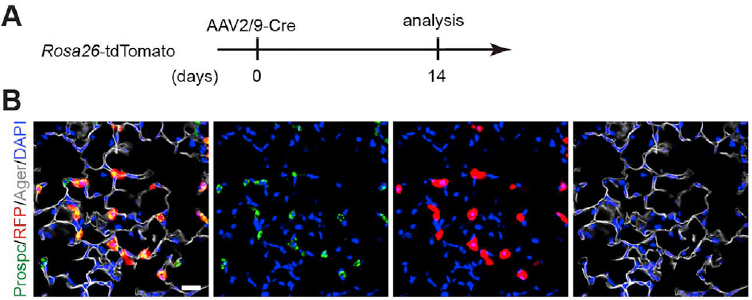
Injection method: Tracheal injection
Site of infection: Lungs
Vector: pAAV-Tgfb1 shRNA
Serotype: rAAV2/9
Viral injection dose: 1E+11 VG (50 µL)
Observation period: 3 weeks
2.4 rAAV Infection of the Kidney

HeYuan Bio—Case of Renal Infection Following Intravenous Injection of rAAV2/8
Total virus count: 2E+11 VG
Injection volume: 200 µL
Viral expression duration: four weeks
2.5 rAAV infection of adipose tissue
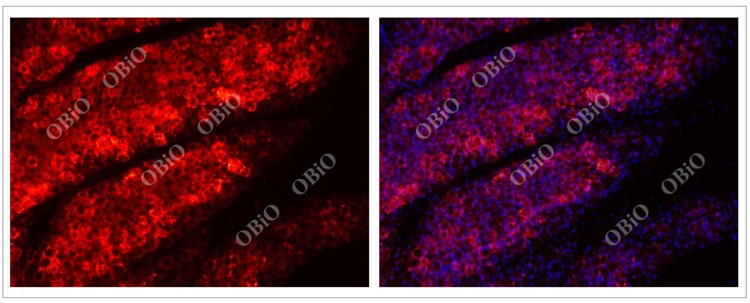
HeYuan Bio—Case of rAAV2/8 Infection Following Multi‑Site Intradermal Injection into Inguinal Adipose Tissue
Total virus count: 4E+10 VG per side
Viral expression duration: four weeks
2.6 rAAV infection of muscle tissue
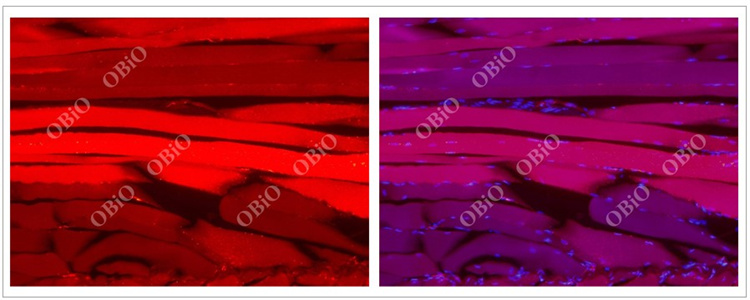
HeYuan Bio—Case Study of Multi‑Site Intramuscular Injection of rAAV2/8 into the Hindlimb Muscles for Muscle Infection
Total virus count: 4E+10 per side
Viral expression duration: four weeks
2.7 rAAV infection of the pancreas
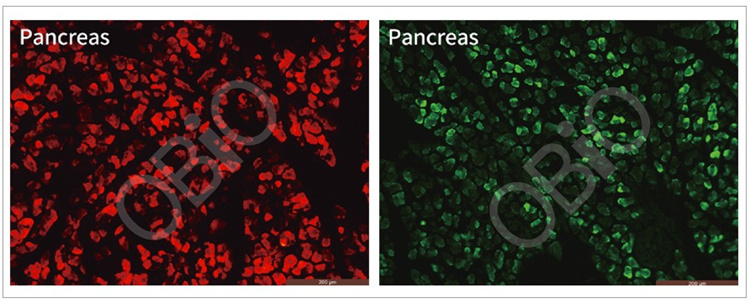
HeYuan Bio—Case Study of Intraperitoneal Injection of rAAV-PAN into the Pancreas
Total virus count: 4E+11 VG
Expression detection time: 4 weeks
Original article link: HeYuan Bio – Adeno‑associated virus AAV
 Telephone consultation


