


 返回
返回
返回

Practical Lab Tips: Techniques for Protein Quantification Using the BCA Assay
The BCA assay is an improved version of the Lowry method. Compared with the Lowry method, the BCA assay is simpler and more convenient to perform; its reagents and the resulting colored complexes exhibit greater stability, are virtually unaffected by interfering substances, and offer higher sensitivity (with a detection limit as low as 0.5 µg/mL), making it more versatile in application. In contrast to the Bradford assay, a key advantage of the BCA method is that it is not affected by detergents such as SDS, Triton X‑100, or Tween‑20.
Principle of the BCA assay
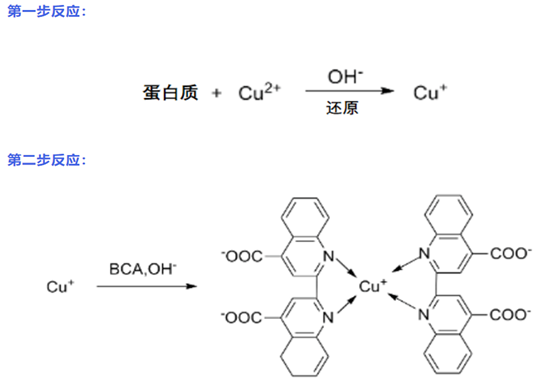
BCA is a stable, alkaline‑soluble complex. Under alkaline conditions, proteins reduce Cu²⁺ to Cu⁺, which then reacts with the unique BCA Reagent A (containing BCA) to produce a sensitive colorimetric reaction, forming a purple complex. This water‑soluble complex exhibits strong absorbance at 562 nm, and its absorbance shows a good linear relationship with protein concentration over a wide range; thus, protein concentration can be determined from the absorbance value.
BCA Experimental Materials and Equipment
✔ List of Supplies
1. BCA assay kit: Typically includes BCA solutions A and B, which must be mixed thoroughly in the specified ratio before use.
2. Protein standards: Bovine serum albumin (BSA) is typically used as the standard protein to construct the standard curve.
3. Colorimetric cuvettes: A 96-well plate or other suitable format may be used to hold samples and perform spectrophotometric measurements.
4. Centrifuge tubes: Used for sample preparation and storage.
5. Pipettes and compatible pipette tips: Used for accurately measuring and dispensing liquids of various volumes.
6. Deionized water: used for preparing solutions and diluting samples.
✔ Device Introduction
Spectrophotometer: In the BCA assay for determining protein concentration, the spectrophotometer is an indispensable instrument, used to measure the absorbance of the sample at a specific wavelength (562 nm). When selecting a spectrophotometer, the following factors should be considered:
• Accuracy: The instrument must be capable of accurately detecting changes as small as 0.001 absorbance units.
• Wavelength range: Ensure the instrument can cover the required test wavelengths, particularly 562 nm for the BCA assay.
• Processing Capacity: Depending on the experimental scale, select a spectrophotometer with an appropriate read speed and sample‑processing capability, such as a single‑well or multi‑well plate reader.
BCA Assay Procedure
I. Microplate Assay
① Preparation of BCA working solution. Based on the number of standards and samples, prepare an appropriate volume of BCA working solution by mixing 50 parts of BCA Reagent A with 1 part of BCA Reagent B (50:1), and mix thoroughly.
② Preparation of the standard curve. Take an ELISA plate (do not touch the bottom of the plate; typically hold it by the side walls) and add the reagents according to the data in the table below:
③ Sample preparation: Dilute the protein sample to be analyzed with deionized water to an appropriate concentration, then pipette 20 µL of the sample and add 200 µL of BCA working solution (protein solution : working solution = 1:20). When dispensing, gently pipette up and down to thoroughly mix the solution.
④ After shaking to mix, incubate at 37°C for 20–30 minutes. Allow to cool to room temperature. The color change is shown in the figure below:
⑤ Measure the absorbance at 562 nm using a microplate reader, with the absorbance of the sample lacking BSA serving as the blank control.
⑥ Plot the standard curve with protein content (µg) on the x-axis and absorbance on the y-axis.
⑦ Based on the measured absorbance values, the protein content of the sample can be determined from the standard curve.
⑧ Calculate the protein concentration: Divide the determined protein content by the sample volume (20 µL), then multiply by the corresponding dilution factor to obtain the actual concentration of the sample being analyzed.
II. Microplate Assay
① Preparation of BCA working solution. Based on the number of standards and samples, prepare an appropriate volume of BCA working solution by mixing 50 volumes of BCA Reagent A with 1 volume of BCA Reagent B (50:1), and mix thoroughly.
② Select seven clean test tubes, labeling six of them as tubes 1 through 6 (including the first blank tube), and marking the seventh as the sample‑to‑be‑tested tube. Using a pipette, accurately transfer the appropriate standard protein solution or sample, distilled water, and BCA working reagent into each tube according to the table below.
③ Pipette an appropriate volume of the standard protein solution (dilute with deionized water as needed), and mix it with the working solution at a ratio of 1:20. Incubate at 37 °C for 30 min, then allow to cool to room temperature.
④ Then, transfer the solutions from each test tube into a cuvette and measure the absorbance at 562 nm using a spectrophotometer.
Precautions for BCA Assay
• To ensure the accuracy of protein concentration measurements, it is recommended to perform triplicate wells and, if necessary, exclude outliers.
• The BCA method for determining protein concentration is susceptible to variations in time and temperature; therefore, it is advisable to generate a standard curve for each assay.
• When adding samples, ensure accurate dispensing and minimize bubble formation to avoid compromising the assay. After sample addition, use a syringe to gently puncture any remaining bubbles, then place the 96-well plate on a shaker for a brief period to ensure thorough mixing and complete contact between the sample and the reaction buffer.
• Upon completion of incubation, absorbance should be measured promptly, and the assay should be performed as quickly as possible to minimize potential errors.
Group Website
-
Contact Information
Landline phone:021-50778506
Business Manager:18616108315Business Cooperation/Scholarships:18616108697
Address:4th Floor, Building 27, Lane 908, Ziping Road, International Medical Park, Pudong New Area, Shanghai
Email:ztt0005@obiosh.com

WeChat Official Account
Online Customer Service 1
Online Customer Service 2
 Telephone consultation


