


 返回
返回
返回

IF=15.5 | A team led by Wang Chenji at Fudan University has elucidated the inhibitory function of DPP9, providing a clinical translation basis for targeted therapy.
I. Literature Review
3 On the 14th of the month, the team led by Wang Chenji from the School of Life Sciences at Fudan University, together with the team headed by Ye Dingwei and Chang Kun at the affiliated Tumor Hospital, jointly published an academic paper titled “DPP9 inhibition boosts antitumor immunity by disrupting BRISC-mediated PD-L1 expression in clear cell renal cell carcinoma” in Cell Death & Differentiation (latest impact factor: 15.5).
The team led by Wang Chenji, Ye Dingwei, and Chang Kun at Fudan University has identified a novel immunotherapy target in renal cell carcinoma and elucidated a new mechanism by which DPP9 enzyme inhibitors mediate antitumor immunity.
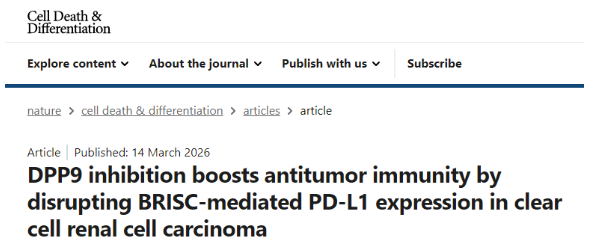
(Image captured from the literature)
Zhang Wei and Wang Yue, postdoctoral fellows at the Fudan University Shanghai Cancer Center, along with doctoral student Feng Tao, are co-first authors.
Wang Chenji, Ye Dingwei, and Chang Kun are the co-corresponding authors.
II. Literature Summary

Cited from Li Ji Bio ® Product:
AC04L011-EZ Trans Plus Cell Transfection Reagent (II)
Programmed cell death protein 1 (PD‑1) and its ligand, programmed death‑ligand 1 (PD‑L1), are key regulatory factors in immune checkpoint blockade therapy for clear cell renal cell carcinoma. However, tumor immune evasion mechanisms and intrinsic resistance often limit the efficacy of these therapies, underscoring the need to develop more effective intervention strategies. In this study, we identified dipeptidyl peptidase 9 (DPP9) as a critical regulator of PD‑L1 expression in clear cell renal cell carcinoma. Pharmacological inhibition of DPP9 activity with the compound 1G244 restored T‑cell cytotoxicity and enhanced the anti‑tumor effects of immune checkpoint blockade. Mechanistically, DPP9 disrupts the BRISC–SHMT2 complex, thereby promoting BRISC‑mediated deubiquitination of IFNAR1 and stabilizing its activity. This process activates the JAK/STAT signaling pathway, ultimately driving PD‑L1 expression. By reducing the interaction between DPP9 and SHMT2, 1G244 promotes ubiquitination and degradation of IFNAR1, leading to decreased PD‑L1 levels and restoration of T‑cell cytotoxicity. Furthermore, combining 1G244 with anti‑CTLA‑4 therapy further amplifies anti‑tumor immune responses, highlighting the substantial potential of this combination regimen. Overall, our findings elucidate the role of the DPP9–BRISC–SHMT2 axis in the transcriptional regulation of PD‑L1 and identify 1G244 as a novel combinatorial agent that enhances the efficacy of cancer immunotherapy.
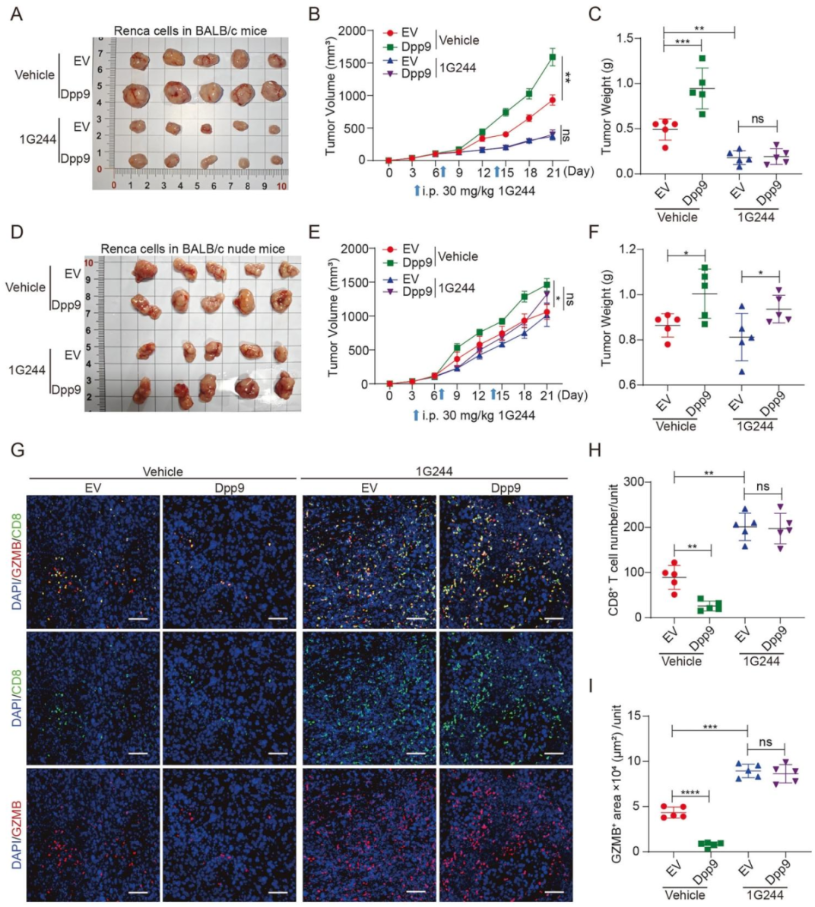
Image captured from the literature.
Article link: https://doi.org/10.1038/s41418-026-01704-x
Group Website
-
Contact Information
Landline phone:021-50778506
Business Manager:18616108315Business Cooperation/Scholarships:18616108697
Address:4th Floor, Building 27, Lane 908, Ziping Road, International Medical Park, Pudong New Area, Shanghai
Email:ztt0005@obiosh.com

WeChat Official Account
Online Customer Service 1
Online Customer Service 2
 Telephone consultation


