


 返回
返回
返回

Application scenarios of lentiviral vectors in the construction of animal disease models (in vivo applications of lentiviruses)
In the process of elucidating the pathogenic mechanisms of diseases, the establishment of animal models has played a crucial role. By inducing disease models or introducing genetic mutations in animal systems, it is possible to replicate the pathogenesis of human diseases, thereby elucidating their pathophysiological, molecular, and genetic mechanisms. Meanwhile, animal models can also be used to evaluate the efficacy and safety of potential therapeutics, providing crucial guidance for new drug development. By conducting pharmacological trials in animal models, researchers can assess a drug’s therapeutic effects, dose–response relationships, pharmacokinetics, and toxicological profiles, thereby offering essential reference data for preclinical drug screening and development.
Through Lentivirus-mediated gene delivery It is possible to generate animal models with specific genotypes—such as gene knockouts, overexpression, or mutations—and to create disease models that mimic the onset and progression of human diseases, thereby facilitating studies on disease mechanisms and drug screening. Lentiviral vectors have a wide range of applications in constructing animal disease models; today, let’s explore their in vivo uses together with the editor.
I. Intratumoral Injection
❤Article Title: METTL3-Mediated LINC00475 Alternative Splicing Promotes Glioma Progression by Inducing Mitochondrial Fission
❤ Published in: Research (Washington, D.C.)
❤ Author’s Affiliation: Guangzhou Medical University
Mitochondrial fission promotes glioma progression, yet the functions and regulatory mechanisms of lncRNAs in mitochondrial fission remain unclear. In this study, the authors demonstrate that, compared with normal brain tissue, LINC00475 is significantly overexpressed in gliomas, exhibits a higher frequency of alternative splicing, and is associated with a poorer prognosis. In vitro and in vivo tumor‑formation assays demonstrated that LINC00475‑S exerts a significantly stronger effect than LINC00475 on glioma cell proliferation, metastasis, autophagy, and mitochondrial fission. Mechanistically, METTL3 promotes the production of LINC00475‑S by catalyzing m6A‑mediated splicing of LINC00475, which in turn suppresses MIF expression and drives mitochondrial fission in glioma cells. Pull-down assays combined with LC/MS and RIP experiments revealed that the m6A‑reader protein HNRNPH1 binds to the GYR and GY domains of LINC00475, thereby facilitating its splicing. METTL3 enhances the interaction between HNRNPH1 and LINC00475 in an m6A‑dependent manner, leading to the generation of LINC00475‑S. Furthermore, METTL3 promotes HNRNPH1‑mediated alternative splicing of LINC00475, which in turn accelerates glioma progression by inducing mitochondrial fission. Targeting the alternative splicing of LINC00475 and m6A editing may serve as a therapeutic strategy for combating gliomas.
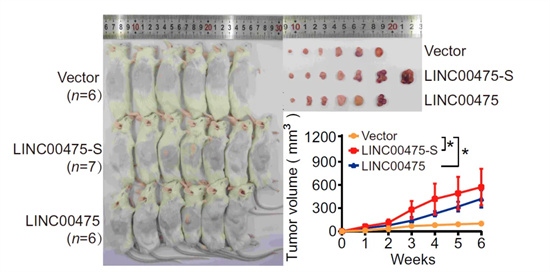
Figure 1. Overexpression of LINC00475-S enhances the tumorigenic potential of U251 cells.
☆ The authors utilized a lentiviral vector to, through… Intratumoral injection (5.0E+06 TU/animal, once every 2 weeks) LINC00475 and LINC00475-S are overexpressed in tumor tissues.
HeYuan Bio We are pleased to offer the gene overexpression viral packaging services described in this article.
II. Intratracheal Injection
❤Article Title: A novel protein RASON encoded by a lncRNA controls oncogenic RAS signaling in KRAS mutant cancers
❤ Published in: Cell Research
❤ Author’s Affiliation: Nanjing University
The LSL‑KrasG12D; Trp53R172H/+ (KP mouse) lung cancer model is a genetically engineered mouse model commonly used to study Kras‑driven tumorigenesis. KrasG12D is an activating mutation of the Kras gene frequently observed in human cancers, while Trp53R172H is a mutant form of the p53 gene. A loxP‑Stop‑loxP cassette is inserted between the coding regions and the promoter of each gene; under conditions lacking Cre recombinase, these genes do not express the mutant proteins. Upon mating with mice that express Cre specifically in certain tissues, the loxP‑Stop‑loxP sequence is excised, leading to the expression of the oncogenic proteins.
In this paper, The authors constructed a lentiviral vector containing Cre, Cas9, and Rason sgRNA via intratracheal injection, thereby simultaneously achieving Rason knockout and activation of the Kras/p53 allele in the lung. Micro-CT–based monitoring of lung tumor incidence and tumor size revealed that RASON knockout markedly suppressed the development of pulmonary tumors in KP mice and significantly prolonged their survival. These findings suggest a shared mechanism underlying the pro-tumorigenic role of RASON in Kras‑mutant tumors.
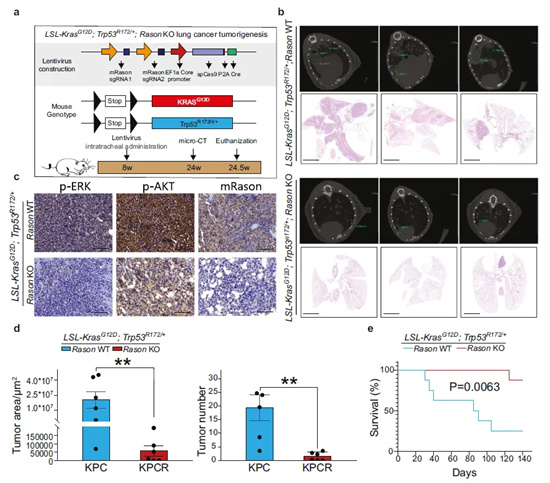
Figure 2. Rason knockout significantly inhibits the formation of lung tumors in KP mice.
☆ The authors used a lentiviral vector containing Cre, Cas9, and a Rason sgRNA, via air… Intracanal injection (1.0E+05 TU/animal) simultaneously achieves Rason knockout and activation of the Kras/p53 alleles in the lung.
HeYuan Bio We are pleased to offer the lentiviral packaging services described in this article.
III. Intrathecal Injection
❤Article Title: Activation of GDNF-ERK-Runx1 signaling contributes to P2X3R gene transcription and bone cancer pain
❤ Published in: iScience
❤Author’s Affiliation: Peking University
Bone cancer pain is a common symptom in patients with bone metastases, yet its underlying mechanisms remain unclear. In this study, the authors report that Runx1 directly enhances the transcriptional activity of the P2X3 receptor (P2X3R) gene promoter in PC12 cells. Knockdown of Runx1 in dorsal root ganglion (DRG) neurons suppresses the functional upregulation of P2X3R, thereby attenuating neuronal hyperexcitability and pain hypersensitivity in tumor-bearing rats; whereas… Overexpression of Runx1 enhances P2X3R gene transcription in DRG neurons, thereby inducing neuronal hyperexcitability and pain hypersensitivity in naïve rats. Activation of the GDNF–GFRα1–Ret–ERK signaling pathway is essential for Runx1‑mediated transcription of the P2X3R gene in DRG neurons and contributes to neuronal hyperexcitability and pain hypersensitivity in tumor‑bearing rats. These findings indicate that Runx1‑dependent P2X3R gene transcription, driven by GDNF–GFRα1–Ret–ERK signaling, underlies the sensitization of DRG neurons and the pathogenesis of bone cancer‑related pain. The authors’ results identify a potential therapeutic target that may alleviate bone metastasis‑associated pain in cancer patients.
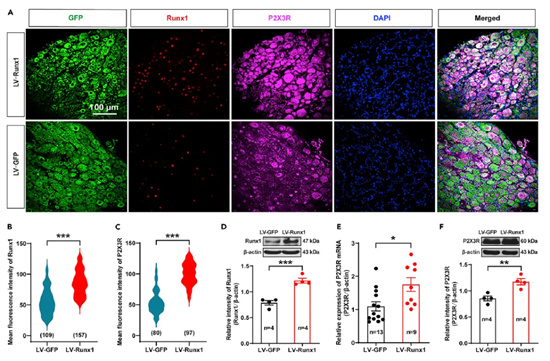
Figure 3. Overexpression of Runx1 in DRG neurons promotes P2X3R gene transcription and protein expression.
☆ The authors utilized a lentiviral vector to, through… Intrathecal injection (5.0 E+08 TU/mL, 20 µL) was used to overexpress Runx1 in DRG neurons, and DRG tissues were harvested 14 days after viral injection.
HeYuan Bio We are pleased to offer the gene overexpression viral packaging services described in this article.
IV. Intravitreal Injection
❤Article Title: ALKBH5-Mediated m6A Modification of A20 Regulates Microglia Polarization in Diabetic Retinopathy
❤ Published in: Frontiers in Immunology
❤ Author’s Affiliation: Sun Yat-sen University
In this study, the authors found that retinal microglia in diabetic rats exhibit a higher M1 polarization rate and a lower M2 polarization rate. As glucose concentrations increase, microglia tend to polarize toward the M1 phenotype. RNA sequencing revealed that glucose‑treated microglia display a distinct gene expression profile, which is enriched in various inflammatory categories and signaling pathways. Moreover, A20 expression is reduced in glucose‑treated microglia, indicating its role as a negative regulator of M1 polarization. In addition, Intravitreal injection of A20‑overexpressing lentivirus (OE‑A20) reversed the enhanced M1 polarization of retinal microglia in diabetic rats. In glucose‑treated microglia, the m6A demethylase ALKBH5 mediates increased m6A modification and accelerates A20 degradation. This study not only offers a new perspective on the pathogenic mechanisms of diabetic retinopathy but also provides novel insights for its diagnosis and treatment.
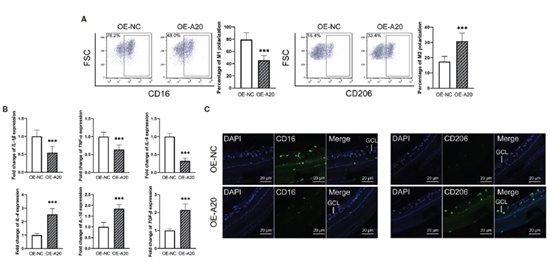
Figure 4. Intravitreal injection of A20‑overexpressing lentivirus can reverse the enhanced M1 polarization of retinal microglia in diabetic rats.
☆ The authors utilized a lentiviral vector to, through… Intravitreal injection (1.0E+09 TU, 10 µL) Overexpression of A20 in the eye.
HeYuan Bio We are pleased to offer the gene overexpression viral packaging services described in this article.
V. Injection into the Inguinal Lymph Nodes
❤Article Title: Fibroblastic reticular cells in lymph node potentiate white adipose tissue beiging through neuro-immune crosstalk in male mice
❤ Published in: Nature Communications
❤ Author’s Affiliation: The University of Hong Kong
Lymph nodes (LN) are typically embedded within metabolically active white adipose tissue (WAT), yet their functional relationship remains poorly understood. In this study, The authors found that fibroblastic reticular cells (FRCs) in inguinal lymph nodes (iLNs) are the primary source of IL‑33, which mediates cold‑induced browning and thermogenesis in subcutaneous white adipose tissue (scWAT). Mechanistically, cold‑induced sympathetic outflow to the iLN activates β1 and β2 adrenergic receptor (AR) signaling in FRCs, thereby promoting the release of IL‑33 into the subcutaneous white adipose tissue (scWAT) surrounding the iLN. IL‑33, in turn, drives type 2 immune responses that enhance the biogenesis of beige adipocytes. The cold‑induced browning of scWAT is abolished by selectively ablating IL‑33 or β1/β2 ARs in FRCs, or by sympathectomizing the iLN; moreover, exogenous IL‑33 supplementation can reverse the impaired cold‑induced browning observed in mice with iLN dysfunction. In summary, this study uncovers an unexpected role for FRCs within the iLN in mediating neuroimmune interactions to maintain energy homeostasis.
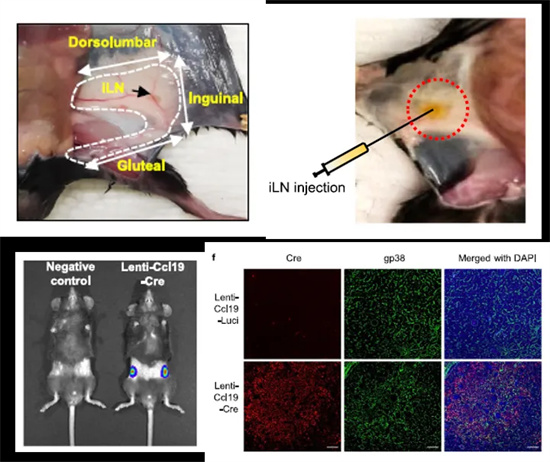
Figure 5. Intralymphatic injection of lentivirus to specifically knock out IL-33 in FRCs within the inguinal lymph nodes.
☆ The authors used a lentiviral vector in IL-33fl/fl mice. Intralymphatic injection into the inguinal lymph nodes (7.5E+06 TU/animal) Lentivirus carrying the tissue-specific promoter Ccl19 and Cre, enabling the specific knockout of IL‑33 in FRCs within iLNs.
HeYuan Bio We are pleased to offer the gene overexpression viral packaging services described in this article.
VI. In Vivo Imaging
❤Article Title: Hypoxia-induced circRNF13 promotes the progression and glycolysis of pancreatic cancer
❤ Published in: Experimental & Molecular Medicine
❤Author’s Affiliation: Shanghai Jiao Tong University
Pancreatic cancer (PC) is among the most aggressive malignancies. Rapid disease progression and distant metastasis are the primary causes of patient mortality. Hypoxia, a hallmark of many cancers, is closely linked to tumor biology. However, little is known about the role of circRNAs in glycolysis‑mediated PC progression under hypoxic conditions. Here, the authors employed RNA sequencing to profile hypoxia‑associated circRNA expression and identified a unique circRNA, designated circRNF13, which is upregulated in PC tissues and may serve as a potential prognostic biomarker. HIF‑1α and EIF4A3 are involved in regulating the biogenesis of circRNF13. Furthermore, circRNF13 was shown to promote cell proliferation, angiogenesis, invasion, and glycolytic activity. Importantly, the authors demonstrated that circRNF13 enhances PDK3 levels by acting as a sponge for miR‑654‑3p, thereby driving malignant processes in PC. These findings indicate that hypoxia‑induced circRNF13, mediated by HIF‑1α and EIF4A3, facilitates tumor progression and glycolytic reprogramming in PC, highlighting the potential of circRNF13 as both a prognostic biomarker and a therapeutic target in this disease.
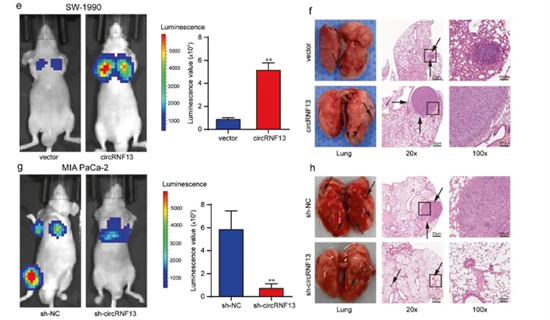
Figure 6. circRNF13 may act as an oncogene to promote pancreatic cancer metastasis.
☆ The author through Tail vein Human pancreatic cancer cells were transfected with either a lentivirus‑mediated construct overexpressing the circRNF13 sequence and the luciferase coding sequence, or one that interferes with the circRNF13 sequence and the luciferase coding sequence. Bioluminescence in vivo imaging was performed every two weeks to monitor tumor cell metastasis.
HeYuan Bio We are pleased to offer the gene overexpression viral packaging services described in this article.
He Yuan Li Ji’s popular reagents
Group Website
-
Contact Information
Landline phone:021-50778506
Business Manager:18616108315Business Cooperation/Scholarships:18616108697
Address:4th Floor, Building 27, Lane 908, Ziping Road, International Medical Park, Pudong New Area, Shanghai
Email:ztt0005@obiosh.com

WeChat Official Account
Online Customer Service 1
Online Customer Service 2
 Telephone consultation


