


 返回
返回
返回

Principle and Applications of the Dual-Luciferase Reporter Assay Kit (Dual-Luciferase Activity)
Event Preview : The end of the article includes a recommendation for Li Ji Bio’s Firefly & Renilla Dual-Luciferase Reporter Assay Kit. Raffle Event , the rewards include Tencent membership, music membership, and more, The draw will be held on June 28. Come on, join in now!
Recommendation for He Yuan Li Ji’s Dual-Luciferase Assay Products

— Experimental Principle —
Firefly luciferase is a protein with a molecular mass of approximately 61 kDa. In the presence of ATP, magnesium ions, and oxygen, it catalyzes the oxidation of luciferin to oxyluciferin, emitting bioluminescence in the process.
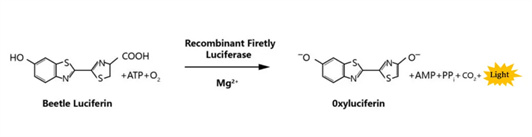
Figure 1. Principle of the luciferase-catalyzed reaction in fireflies
Sea pansy luciferase is a protein with a molecular mass of approximately 36 kDa. In the presence of oxygen, it catalyzes the oxidation of coelenterazine to coelenteramide, and this oxidation process also emits bioluminescence.

Figure 2. Principle of the luciferase-catalyzed reaction in sea cucumbers
The dual-luciferase reporter assay system co-expresses firefly luciferase and sea pansy luciferase in cells, with firefly luciferase serving as Reporter gene The change in the expression of the target gene, with sea pansy luciferase serving as… Reference gene , providing a control for transcriptional efficiency (reducing the impact of intrinsic variables—such as the number of cultured cells and the efficiency of cell transfection and lysis—on experimental accuracy). The two luciferases exhibit no species‑specific homology and each responds to a distinct substrate, thereby avoiding cross‑interference.
— Application Areas —
I. Validation of Target Genes
miRNAs primarily exert their effects by binding to the 3′UTRs of target genes, leading to mRNA degradation or translational repression. To investigate this, the 3′UTR sequences of the gene of interest—both the wild-type and a mutant version lacking the miRNA-binding site—are cloned downstream of the luciferase reporter gene. By comparing changes in luciferase activity before and after miRNA overexpression, one can determine the functional role of the miRNA and identify the specific binding sites within the target gene’s 3′UTR.
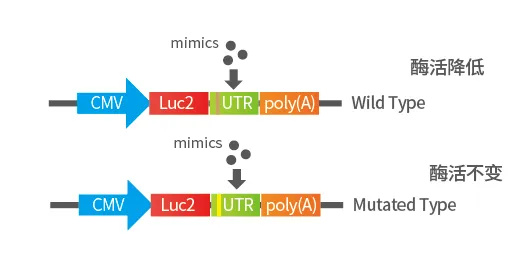
Figure 3. Principle of experimental design for target gene validation
Applicable experimental types: miRNA–target genes (mRNA, LncRNA, circRNA), m6A sites, enhancers
II. Verification of Promoter Activity
Transcription factors primarily exert their effects by binding to the promoters of target genes. To identify the binding sites of a transcription factor on a target gene’s promoter and to assess its regulatory role, the sequence of the target gene’s promoter is cloned upstream of the luciferase reporter gene, and changes in reporter gene expression are monitored following co‑expression of the transcription factor.

Figure 4. Principle of the promoter validation experimental design
— Application Examples —
1. Example One
Article Title: METTL14/miR-29c-3p axis drives aerobic glycolysis to promote triple-negative breast cancer progression though TRIM9-mediated PKM2 ubiquitination
Journal: Journal of Cellular and Molecular Medicine
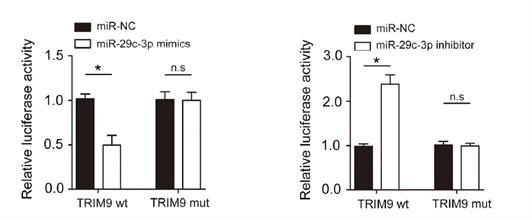
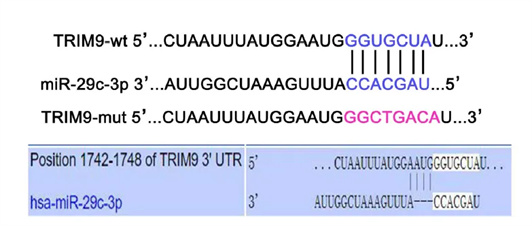
Huayuan Assistance: WT TRIM9-3’UTR and the mutant TRIM9-3’UTR were cloned into the pMIR-REPORT vector. Co-transfection with miR‑29c‑3p mimics, miR‑29c‑3p inhibitors, and miRNA‑NC confirmed the binding between miR‑29c‑3p and TRIM9.
2. Example Two
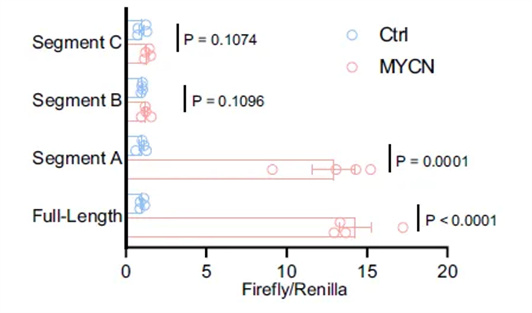
Article Title: The ELAVL3/MYCN positive feedback loop provides a therapeutic target for neuroendocrine prostate cancer
Journal published in: Nature Communications
Support from He Yuan: To elucidate the molecular mechanisms underlying MYCN‑mediated transcriptional regulation, the authors cloned the full-length ELAVL3 promoter and the promoters of Segments A, B, and C into luciferase reporter vectors. Dual‑luciferase reporter assays revealed that MYCN significantly upregulated luciferase activity in both the full-length ELAVL3 construct and the Segment A construct, thereby demonstrating MYCN’s transcriptional regulation of ELAVL3.

3. Example Three
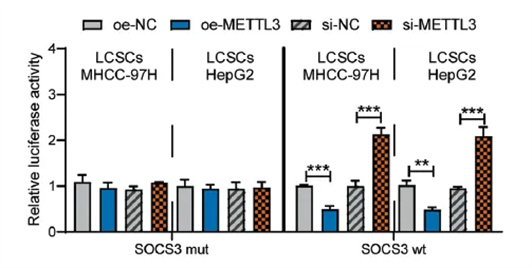
Article Title: METTL3 facilitates stemness properties and tumorigenicity of cancer stem cells in hepatocellular carcinoma through the SOCS3/JAK2/STAT3 signaling pathway
Journal published: Cancer Gene Therapy
Huayuan Assistance: The CDS region of SOCS3, containing both the wild-type m6A recognition motif (GGACU) and the mutant motif (CCTGA), was cloned into the pMIR-REPORT vector. By overexpressing and knocking down METTL3, and using a dual-luciferase reporter assay, we confirmed the interaction between METTL3 and SOCS3.

/ Dual-luciferase assay /
Event Time: Effective immediately through June 28.
Prize ( Random Select 6 people ): Receive a 1-year membership card, including access to iQIYI, Tencent Video, Youku, Mango TV, Bilibili, QQ Music, and NetEase Cloud Music—choose your preferred services. One of them )

Scope of Activities: National biological-related End customer
Drawing time: June 28, 2024, 1:00 PM
How to claim: 3 business days Internal contact Manager Liang Prize redemption: failure to claim by the deadline will be considered an automatic forfeiture.

Precautions:
After following the WeChat official account, reply with “ Dual-luciferase Participate in the activity;
1. Winners will receive a free subscription to iQIYI, Tencent Video, Youku, Mango TV, Bilibili, QQ Music, or NetEase Cloud Music— One of them ;
2. Transferable; any unused portion will be deemed automatically forfeited upon expiration.
3. Little cuties can follow our official account to stay updated on the latest promotions.
4. The final interpretation of this event shall be reserved by He Yuan Li Ji.
Group Website
-
Contact Information
Landline phone:021-50778506
Business Manager:18616108315Business Cooperation/Scholarships:18616108697
Address:4th Floor, Building 27, Lane 908, Ziping Road, International Medical Park, Pudong New Area, Shanghai
Email:ztt0005@obiosh.com

WeChat Official Account
Online Customer Service 1
Online Customer Service 2
 Telephone consultation


