


 返回
返回
返回

Which is better, CS10 cryopreservation solution or Li Ji cell cryopreservation solution? How should you choose?
Cell cryopreservation solution serves as the liquid environment during cell freezing, providing nutrients and protective effects. It lowers the freezing point, increases the permeability of cell membranes to water, and facilitates the extrusion of intracellular water before freezing, thereby preventing or minimizing ice‑crystal‑induced damage. This allows cells to temporarily enter a quiescent state while preserving their cellular characteristics, so that they can be directly revived when needed to regain viability. So, which is better—CS10 cryopreservation solution or Li Ji cell cryopreservation solution? How should you choose? We’ll introduce the options below.
I. Product Introduction to CS10 Cryopreservation Solution and Li Ji Cell Cryopreservation Solution
1. CryoStor CS10 : The formulation is unique, serum‑free and free of animal‑derived components, and contains 10% dimethyl sulfoxide (DMSO) in the cryopreservation solution. Designed to protect cells under low‑temperature conditions (−80°C to −196°C), CryoStor CS10 provides a safe, protective environment for cells and tissues during freezing, storage, and thawing. CryoStor CS10 is recommended for cryopreserving stem cells, tissue samples, human peripheral blood, CHO cells, myeloma cells, hybridoma cells, bone marrow mesenchymal stem cells, human embryonic stem cells and human induced pluripotent stem cells (ES cells and iPS cells), as well as other highly sensitive cell types. CryoStor CS10 is manufactured under USP‑grade cGMP compliance.
2. HeYuan Li Ji Rapid Cell Cryopreservation Solution (Serum-Free, Protein-Free): It is compatible with the vast majority of tumor cells and conventional cell lines, as well as most stem cells (for a list of cell types tested by HeYuan Li Ji, please refer to our official website). Cryopreserved cells can be stored long-term at −80°C. Free of animal‑derived proteins and serum components, it effectively minimizes contamination by bacteria, viruses, mycoplasma, and other microorganisms, ensuring the safety of cryopreserved cells. This cryopreservation solution contains DMSO, glucose, and various other cell‑culture nutrients, enhancing cell viability and metabolic activity; it is also suitable for serum‑free culture systems and protein‑expressing cell lines.
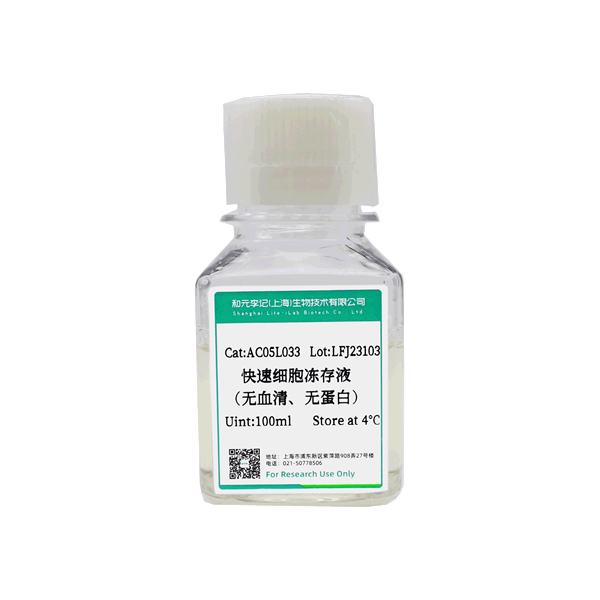
II. Product Advantages of CS10 Cryopreservation Solution and Li Ji Cell Cryopreservation Solution
Brand | Advantage |
CS10 cryopreservation solution | 1. Open the lid and use immediately; 2. Serum-free and protein-free, with no animal-derived components, Does not contain endotoxins; 3. USP-grade, manufactured under cGMP conditions; 4. High cell viability and recovery rates. |
Li Cell cryopreservation solution | 1. High viability and robust activity: Following cell resuscitation, the cells exhibit high viability, strong activity, and no impairment of cellular functions. 2. Simple operation: No need for programmed cooling; samples can be directly cryopreserved at −80°C. 3. High safety: With a well-defined composition and free from animal-derived ingredients, it ensures safety. 4. Ready to use: No additional preparation required—convenient and fast. |
III. Use of Cryopreservation Solutions Precautions
1. After cells are aliquoted with cryopreservation solution, minimize the time they spend at room temperature and transfer them promptly to a −80°C ultra-low freezer.
2. For cryopreservation of stem cells (such as ES cells), it is recommended to conduct a trial cryopreservation and culture of the frozen cells for at least one week prior to use.
Culture, and proceed with formal cryopreservation after confirming cell viability.
3. This product contains 10% DMSO. For cells that are sensitive to DMSO, we recommend conducting a preliminary cell‑freezing experiment with this product for at least one week.
Store in culture, and proceed with formal cryopreservation after confirming viability.
4. During cell recovery, the cryopreserved cells should be immediately placed in a 37°C water bath and gently shaken; rapid thawing helps to improve recovery efficiency.
5. For relatively fragile or valuable cell lines, it is recommended that, after overnight storage at −80°C, they be transferred to a liquid nitrogen tank for long-term preservation.
That concludes our overview of “Which is better: CS10 cryopreservation solution or Li Ji cell cryopreservation solution? How should you choose?” The choice should be guided by your specific research needs.
Group Website
-
Contact Information
Landline phone:021-50778506
Business Manager:18616108315Business Cooperation/Scholarships:18616108697
Address:4th Floor, Building 27, Lane 908, Ziping Road, International Medical Park, Pudong New Area, Shanghai
Email:ztt0005@obiosh.com

WeChat Official Account
Online Customer Service 1
Online Customer Service 2
 Telephone consultation


