


 返回
返回
返回

IF=22.5 | Zhejiang University and Suzhou Municipal Hospital co‑published a paper: MN‑MOF@DHC multifunctional microneedle patch enables comprehensive wound healing for diabetic ulcers.
I. Literature Review
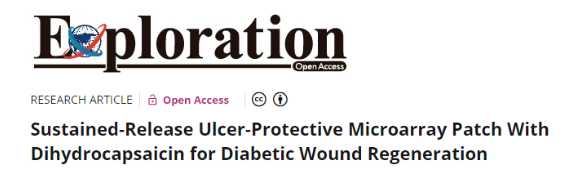
5 On the 28th of the month, Professor Hu Yihé and Professor Zhang Xianzhu from the Department of Orthopedics at the First Affiliated Hospital of Zhejiang University School of Medicine, together with Professor Xu Zonghan from the Department of Orthopedics at Suzhou Municipal Hospital, jointly published an academic paper titled “Sustained-Release Ulcer-Protective Microarray Patch With Dihydrocapsaicin for Diabetic Wound Regeneration” in the journal Exploration (latest impact factor: 22.5).
This study addresses the limitations of current treatments for diabetic foot ulcers, which fail to simultaneously tackle excessive oxidative stress and impaired angiogenesis. To this end, we developed a composite microneedle system—cerium-based metal–organic framework loaded with dihydrocapsaicin encapsulated in gelatin methacryloyl hydrogel (MN-MOF@DHC)—that enables sustained release of dihydrocapsaicin for nearly 28 days. Both in vitro and in vivo experiments demonstrated that this system effectively reduces reactive oxygen species levels, promotes the polarization of macrophages from the M1 to the M2 phenotype, and stimulates endothelial cell–mediated angiogenesis. Consequently, it significantly accelerates the healing of diabetic wounds while exhibiting excellent biocompatibility, offering a promising new approach for the treatment of diabetic foot ulcers.
(Image captured from the literature)
Yu-Xu Wu, a doctoral student at the School of Medicine, Zhejiang University; Kan Jiang, from the Department of Radiology at the First Affiliated Hospital of Zhejiang University School of Medicine; and Xiao-Wen Wen, from the Burn Department of Suzhou Municipal Hospital, are the co-first authors of this paper.
Professor Hu Yihé and Professor Zhang Xianjie from the Department of Orthopedics, the First Affiliated Hospital of Zhejiang University School of Medicine, along with Professor Xu Zonghan from the Department of Orthopedics at Suzhou Municipal Hospital, served as co‑corresponding authors of the paper.
II. Literature Summary

Cited from Li Ji Bio ® Product: AC12L072-JC-1 Mitochondrial Membrane Potential Assay Kit
Diabetic foot ulcers represent a clinically challenging condition that poses a persistent threat to patient health. Current therapeutic approaches fail to simultaneously address the excessive oxidative stress and impaired angiogenesis that arise during wound healing in diabetic patients. To overcome these limitations, this study has developed an innovative microneedle‑based drug delivery system. The system employs cerium‑based metal–organic frameworks loaded with dihydrocapsaicin as the carrier. Constructed from a gelatin methacryloyl hydrogel, the resulting microneedle–metal–organic framework–dihydrocapsaicin composite enables sustained release of dihydrocapsaicin, thereby effectively supporting the entire course of diabetic wound treatment. Results demonstrate that this composite significantly reduces reactive oxygen species levels, promotes the polarization of macrophages from the pro‑inflammatory M1 phenotype to the anti‑inflammatory M2 subtype, and markedly enhances the angiogenic capacity of endothelial cells. Collectively, these effects accelerate wound healing. Overall, this microneedle‑based therapeutic strategy offers a highly promising approach for the management of diabetic foot ulcers.
In this study, we developed an MN‑MOF@DHC composite microneedle system that exhibits excellent mechanical strength and structural stability, enabling the sustained release of dihydrocapsiate for nearly 28 days. This system delivers multiple therapeutic benefits: it effectively reduces reactive oxygen species levels to alleviate oxidative stress, modulates macrophage polarization to mitigate chronic inflammation, inhibits endothelial cell apoptosis, and promotes angiogenesis at the wound site—collectively accelerating the healing of diabetic chronic wounds. Moreover, the system demonstrates favorable biocompatibility and safety, offering a highly promising new approach for the treatment of diabetic foot ulcers.
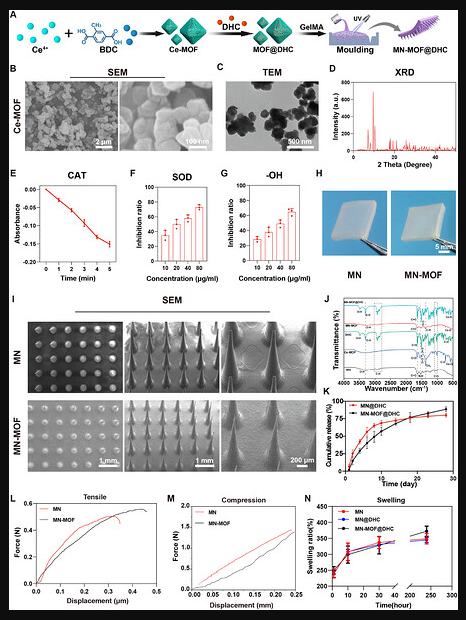
Figure 1 is reproduced from the literature.
MN-MOF@DHC Preparation and characterization. (A) Schematic illustration of the preparation process for MN‑MOF@DHC. (B) Scanning electron microscopy image of Ce‑MOF. (C) Transmission electron microscopy image of Ce‑MOF. (D) X-ray diffraction pattern of Ce‑MOF. (E–G) Catalytic performance, superoxide anion scavenging ability, and ·OH scavenging ability of Ce‑MOF. (H) Macroscopic morphology images of MN and MN‑MOF. (I) Scanning electron microscopy images of MN and MN‑MOF. (J) Fourier-transform infrared spectra of MN, Ce‑MOF, DHC, MN‑MOF, and MN‑MOF@DHC. (K) Release profiles of dihydrocapsaicin from microneedles after immersion in saline solution. (L–N) Tensile, compressive, and swelling‑rate curves of the microneedles. (n = 3; error bars represent mean ± standard deviation; all data were analyzed using one-way ANOVA, with post hoc comparisons performed using Tukey’s test. *p < 0.05, **p < 0.01, ***p < 0.001, ****p < 0.0001).
Article link: https://doi.org/10.1002/EXP.20250129
Group Website
-
Contact Information
Landline phone:021-50778506
Business Manager:18616108315Business Cooperation/Scholarships:18616108697
Address:4th Floor, Building 27, Lane 908, Ziping Road, International Medical Park, Pudong New Area, Shanghai
Email:ztt0005@obiosh.com

WeChat Official Account
Online Customer Service 1
Online Customer Service 2
 Telephone consultation


