


 返回
返回
返回

IF=20.3 | Liu Gang, Chen Tianfeng, and Huang Jiaxing’s team in BAM: A novel nanomineral–based strategy for treating triple-negative breast cancer, accelerating clinical translation.
I. Literature Review
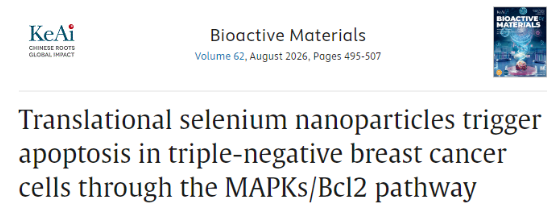
Recently, Professor Liu Gang of the Southern Hospital of Southern Medical University and Professor Chen Tianfeng of Jinan University co-authored an academic paper titled “Translational selenium nanoparticles trigger apoptosis in triple-negative breast cancer cells through the MAPKs/Bcl2 pathway” in Bioactive Materials (latest impact factor: 20.3).
The team developed selenium nanoparticles modified with a mushroom polysaccharide–protein complex (PTR-SeNPs) and, by conjugating them with the Fab fragment of an anti-human MUC1 antibody (7B8), generated doubly modified nanoparticles (MUC1@PTR-SeNPs) for the treatment of triple-negative breast cancer (TNBC).
(Image captured from the literature)
Zou Binhua, an assistant researcher at the Southern Hospital of Southern Medical University, and Dr. Li Shuoshan of Jinan University are the co-first authors of this paper.
Professor Liu Gang of the Southern Hospital, Southern Medical University, Professor Huang Jiaxing of the Hong Kong Polytechnic University, and Professor Chen Tianfeng of Jinan University are the co-corresponding authors of the paper.
II. Literature Summary

Cited from Li Ji Bio ® Product:
AC08L011-1X PBS (Aseptic)
AC05L033- Rapid Cell Cryopreservation Solution (Serum-Free, Protein-Free)
AP34L024-EZ ECL pico Chemiluminescent Liquid (Ultra-Sensitive Type)
AC01L064-RPMI-1640 medium (Contains L-Glutamine)
AC01L053-DMEM/High Glucose ( Contains L-glutamine, contains HEPES)
Triple-negative breast cancer is characterized by highly aggressive biology: it tends to recur rapidly after treatment, metastasize easily, and is associated with markedly reduced patient survival. These features underscore the urgent need for innovative therapeutic strategies in this disease. The research team prepared selenium nanoparticles (PTR‑SeNPs) modified with a mushroom polysaccharide–protein complex and evaluated their properties. In vitro, they assessed the antitumor efficacy across 17 human triple-negative breast cancer cell lines and elucidated the mechanism by which PTR‑SeNPs induce apoptosis. Experimental results in various triple-negative breast cancer cell models demonstrated that PTR‑SeNPs exhibit potent antitumor activity, effectively triggering mitochondria‑dependent apoptotic pathways. Moreover, via the MAPKs/Bcl2 signaling cascade, these nanoparticles also exert robust cytotoxic effects. Notably, when PTR‑SeNPs were conjugated with an anti‑human MUC1 antibody, they formed bifunctional nanoparticles (MUC1@PTR‑SeNPs). These hybrid nanoparticles significantly enhanced antitumor efficacy in five triple-negative breast cancer cell lines with high or moderate MUC1 expression. Furthermore, oral administration of MUC1@PTR‑SeNPs to mice bearing MDA‑MB‑468 tumors for 30 consecutive days resulted in marked inhibition of tumor growth, mediated through mitochondrial‑dependent apoptotic processes.
This study reveals the therapeutic potential of PTR‑SeNPs in combating human triple‑negative breast cancer, while elucidating their molecular mechanisms, metabolic profiles, and toxicological characteristics. These findings pave the way for advancing this novel nanomineral as an effective approach for the treatment of triple‑negative breast cancer in the future.
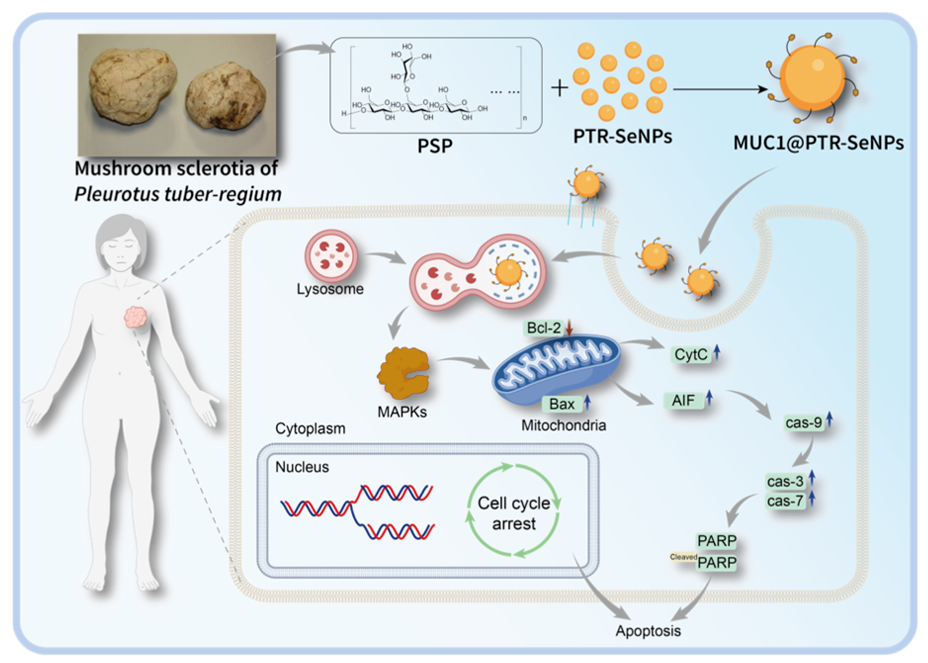
Figure 1 is reproduced from the literature.
Article link: https://doi.org/10.1016/j.bioactmat.2026.02.027
Group Website
-
Contact Information
Landline phone:021-50778506
Business Manager:18616108315Business Cooperation/Scholarships:18616108697
Address:4th Floor, Building 27, Lane 908, Ziping Road, International Medical Park, Pudong New Area, Shanghai
Email:ztt0005@obiosh.com

WeChat Official Account
Online Customer Service 1
Online Customer Service 2
 Telephone consultation


