


 返回
返回
返回

IF=14.1 | Lu Yuhua’s team: The GMFG‑TNS4 pathway transmits matrix mechanical signals, promoting pancreatic cancer metastasis.
I. Literature Review
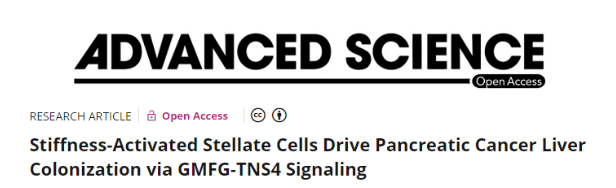
2026 On June 18, the research team led by Professor Lu Yuhua at the Affiliated Hospital of Nantong University published an academic paper titled “Stiffness-Activated Stellate Cells Drive Pancreatic Cancer Liver Colonization via GMFG-TNS4 Signaling” in Advanced Science (latest impact factor: 14.1).
The team’s research has revealed that the stiff microenvironment of liver fibrosis promotes pancreatic cancer liver metastasis via the Piezo1–GMFG–TNS4 signaling pathway, which could serve as a therapeutic target.
(Image captured from the literature)
II. Literature Summary
Cited from Li Ji Bio ® Product:
AC01L043-DMEM/High Glucose (Contains L-Glutamine)
AC03L332- Green–Streptomycin Mixed Solution (Double Antibiotics, 100X)
AP01L014-RIPA Lysis buffer (strong)
AP02L192- Protease and Phosphatase Inhibitor Cocktail (100×, EDTA-free)
AP34L065-EZ ECL Flyg Chemiluminescent solution (femtogram level)
AP11L124- Coomassie Brilliant Blue Quick Stain (Ultra-Sensitive)
AN51L758- Total RNA Extraction Kit (Trizol)
AS21L123-DAPI Dye solution
AC28L112- Universal tissue fixative (4% paraformaldehyde)
AS11L011- Hematoxylin and Eosin (HE) Staining Kit
Liver metastasis remains the leading cause of death in patients with pancreatic cancer. Activated hepatic stellate cells deposit collagen, creating a rigid fibrotic microenvironment that promotes cancer cell dissemination; however, the underlying mechanisms remain incompletely understood. Using tunable hydrogels, studies have demonstrated that elevated matrix stiffness activates hepatic stellate cells, initiating a self‑reinforcing cycle of matrix stiffening. Mechanistically, changes in stiffness trigger Piezo1‑mediated Ca²⁺ influx, which elicits endoplasmic reticulum stress and simultaneously activates the IRE1α–XBP1 pathway, thereby enhancing the transcription and secretion of the glial maturation factor γ (GMFG). This factor enters pancreatic cancer cells, binds to intracellular tensin‑4, and facilitates activation of the FAK/AKT signaling cascade, driving two processes critical for cancer cell metastasis: increased adhesion between cancer cells and the extracellular matrix, and enhanced de novo fatty acid synthesis. In a mouse model with progressively increasing liver stiffness, pharmacological inhibition of mechanosensitive cation channels reduces the extent of cancer cell metastasis while suppressing GMFG‑dependent epithelial traits and lipogenesis. Moreover, targeting the GMFG–TNS4 axis can inhibit both early hepatic micrometastases and long‑term liver metastatic progression.
These findings reveal the link between fibrotic stiffness and pro-metastatic signaling, while also indicating that the Piezo1–GMFG–TNS4 pathway represents a critical therapeutic target for pancreatic cancer liver metastasis.
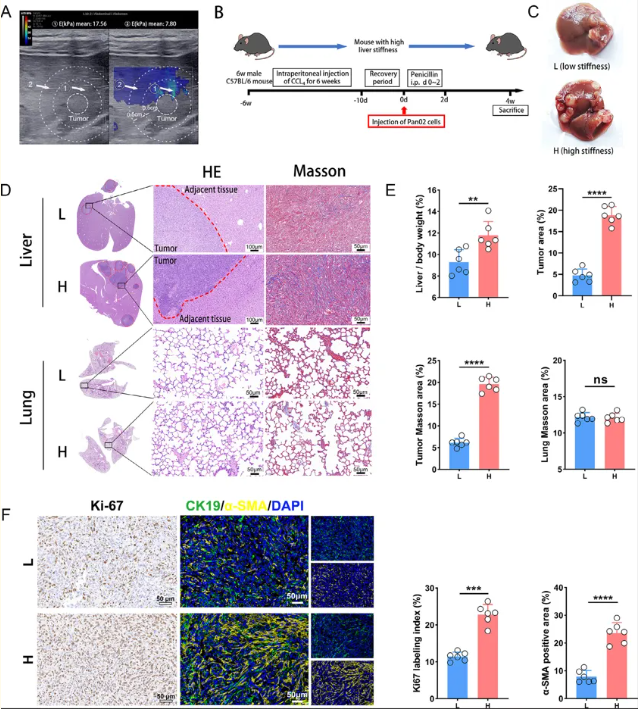
Image captured from the literature.
Article link: https://doi.org/10.1002/advs.76173
Group Website
-
Contact Information
Landline phone:021-50778506
Business Manager:18616108315Business Cooperation/Scholarships:18616108697
Address:4th Floor, Building 27, Lane 908, Ziping Road, International Medical Park, Pudong New Area, Shanghai
Email:ztt0005@obiosh.com

WeChat Official Account
Online Customer Service 1
Online Customer Service 2
 Telephone consultation


