


 返回
返回
返回


Rapid Cell Cryopreservation Solution (Serum-Free, Protein-Free)

One click copying of product information
-
AC05L033100mL99
- Product Description
- Product FAQ
- COA
- Product Literature
- MSDS
- Operation video
-
Product Description
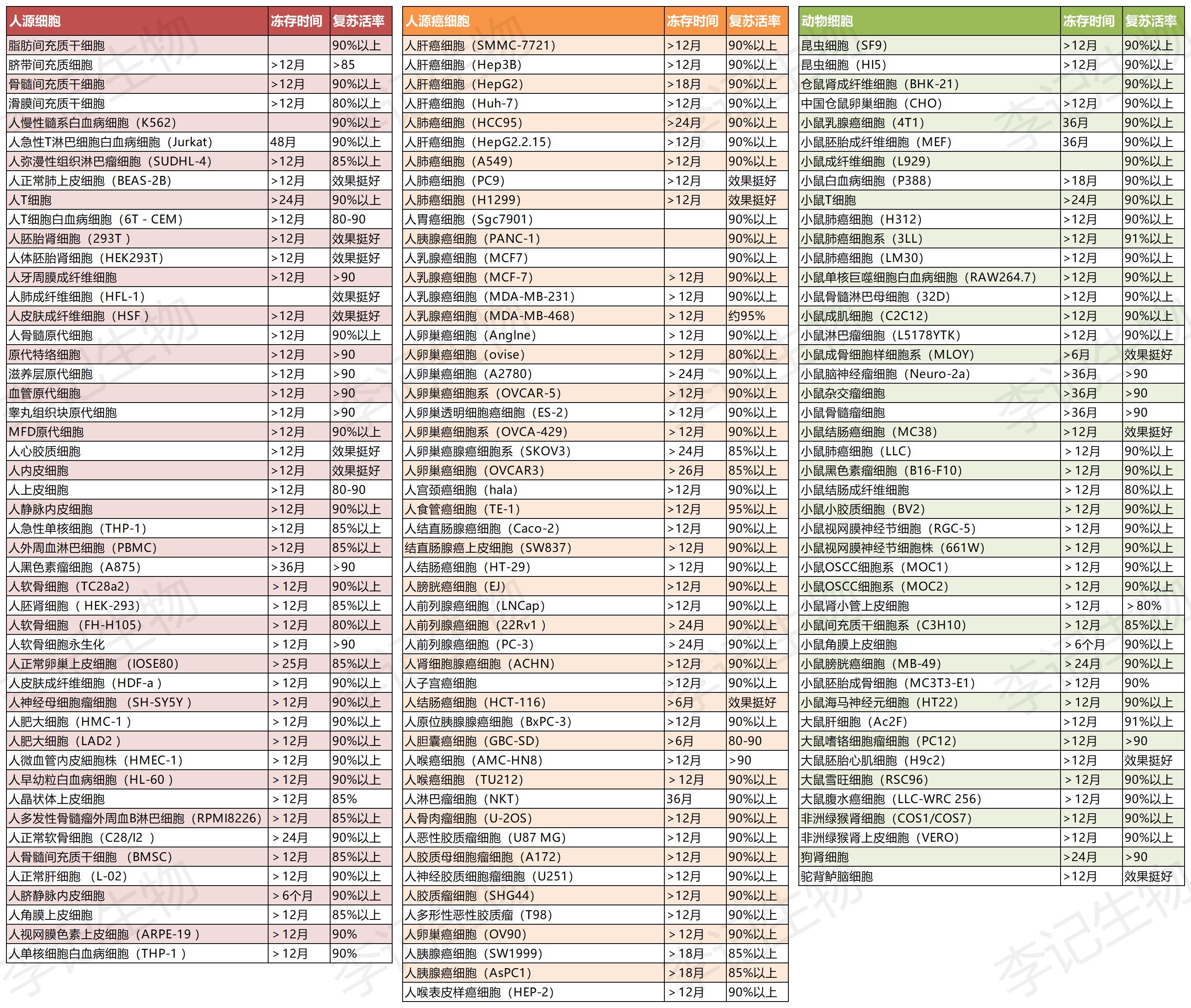
HeYuan Li Ji Rapid Cell Cryopreservation Solution (serum‑free, protein‑free) is compatible with the vast majority of tumor cells and conventional cell lines, as well as most stem cells. Cryopreserved cells can be stored long-term at −80°C. Free of animal‑derived proteins and serum components, it effectively minimizes contamination by bacteria, viruses, mycoplasma, and other microorganisms, ensuring the safety of cryopreserved cells. This solution contains DMSO, glucose, and various cell‑culture nutrients to enhance cell viability and metabolic activity, and is also suitable for serum‑free culture systems and protein‑expressing cell lines.
Product Advantages
1. High viability and robust activity: Following cell resuscitation, the cells exhibit high viability, strong activity, and no impairment of cellular functions.
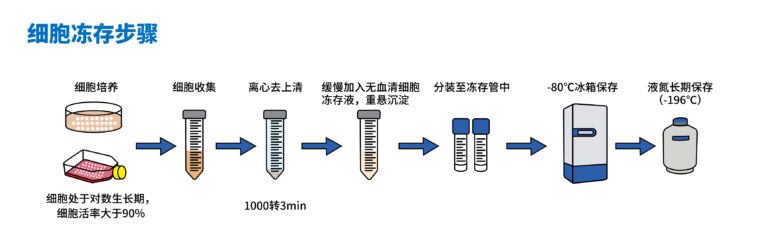
2. Simple operation: No need for programmed cooling; samples can be directly cryopreserved at −80°C.
3. High safety: With a well-defined composition and free from animal-derived ingredients, it ensures safety.
4. Ready to use: No additional preparation required—convenient and fast.
Product ingredients
Product Name
Item number
Specifications
Rapid Cell Cryopreservation Solution (Serum-Free, Protein-Free)
AC05L033
100mL
Transportation and Storage
Store at room temperature. Keep refrigerated at 4°C; shelf life: 24 months.
Instructions for Use
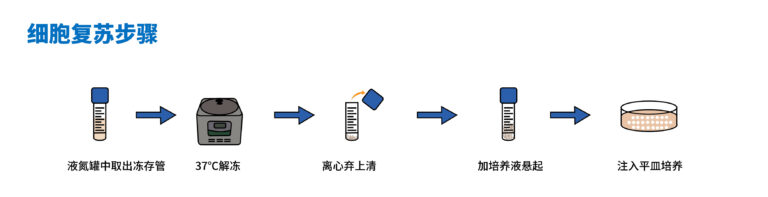 Cryopreservation Solution Database
This product is intended solely for scientific research and must not be used for clinical diagnosis, treatment, or any other purposes.
-
Q: Traditional cell cryopreservation—stepwise cooling
A: Place the cryovial at 4°C for 10 minutes → → → at −20°C for 30 minutes → → → at −80°C for 16–18 hours (or overnight) → → → transfer to a liquid nitrogen tank for long-term storage. Do not leave it at −20°C for more than 1 hour to avoid excessive ice crystal formation, which can lead to substantial cell death; alternatively, you may skip this step and directly transfer the vial to a −80°C freezer, though the survival rate will be slightly lower.
Q: The recovery rate after thawing is still quite good, but the cells don’t seem to be in as good a condition as when using DMSO plus serum.
A: We believe this condition is unrelated to the cryopreservation medium. The high cell recovery rate indicates excellent cell viability; traditional serum‑based cryopreservation does provide nutrients, but during freezing, cells are in a quiescent state and consume very little of these nutrients. Our serum‑free cryopreservation medium also contains an adequate amount of glucose. Therefore, it is likely that the cells were already in a nutrient‑depleted state prior to freezing—meaning they were exposed to a lack of nutrients for too long during the process. This is precisely why we recommend using our serum‑free cryopreservation medium and performing rapid freezing.
Q: Is Li Ji Bio’s rapid cell cryopreservation solution less viscous than those of other brands?
A: Each company uses a different formulation; for higher-viscosity products, polyvinyl alcohol is typically employed, whereas Li Ji Bio uses polyethylene glycol. Based on our testing, we’ve found that lower viscosity formulations are more convenient for customers to handle.
Q: If I use a rapid cell cryopreservation solution, do I still need to place the cells in a cryovial?
A: Using a rapid cell cryopreservation solution constitutes flash freezing; do not transfer the cells to a cryovial or add any additional components for stepwise freezing, as glucose alone serves as the energy source. Performing a stepwise freeze can easily compromise the cells’ survival environment.
Q: Previously, I used a rapid cryopreservation solution and stored the cells at −80°C for the first two months; they revived very well. However, after another two months, the cells could no longer be revived. Why is this?
A: If this situation occurs, it can generally be attributed to significant temperature fluctuations during the refrigerator’s operation. In many laboratories, ultra‑low‑temperature freezers are used not only for storing cells but also for preserving various samples. Frequent opening and closing by lab personnel can lead to temperature instability inside the unit. We recommend using a liquid nitrogen tank for long‑term cell storage, as it provides more reliable conditions.
Q: How long can cells be cryopreserved?
A: At −80°C, samples can typically be stored for 6 months. For longer-term preservation, it is recommended to transfer them to liquid nitrogen after overnight storage at −80°C.
-
Fill in the product batch number for inquiry
-
Fill in the product batch number for inquiry
Best Sellers

Popular Articles
Group Website
-
Contact Information
Landline phone:021-50778506
Business Manager:18616108315Business Cooperation/Scholarships:18616108697
Address:4th Floor, Building 27, Lane 908, Ziping Road, International Medical Park, Pudong New Area, Shanghai
Email:ztt0005@obiosh.com

WeChat Official Account
Online Customer Service 1
Online Customer Service 2
 Telephone consultation


